XIII. Against the Performance of Sovereignty (§53–§57)

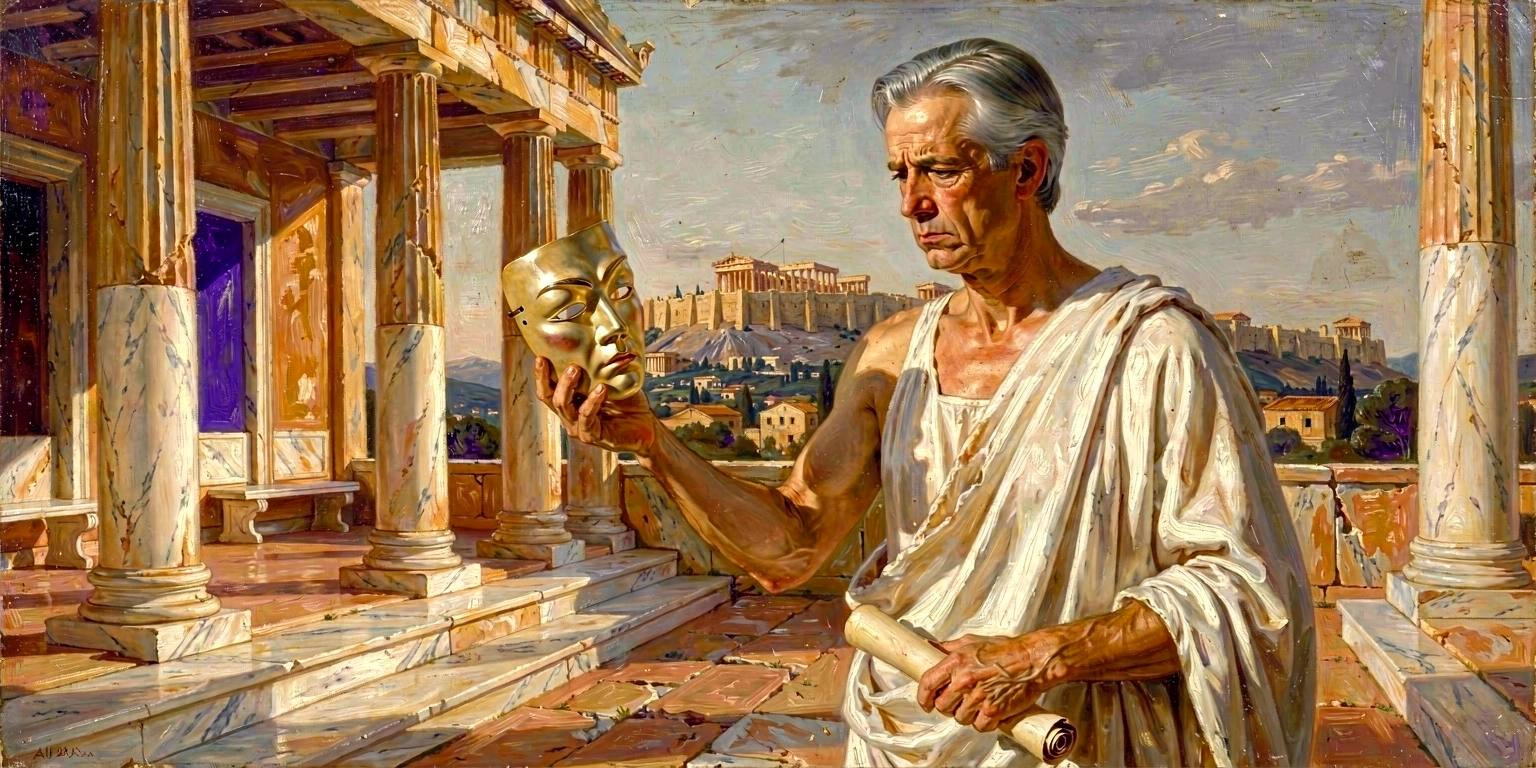
Carney holding an actor's mask out at arm's length and examining it with mild distaste; against the performance of sovereignty.
Against the Performance of Sovereignty – the mask held off.

🇨🇦 Original

But I would also say that Great powers can afford to go it alone. They have the market size, the military capacity, and the leverage to dictate terms. Middle powers do not.

But when we only negotiate bilaterally with a hegemon, we negotiate from weakness. We accept what is offered. We compete with each other to be the most accommodating.

This is not sovereignty. It is the performance of sovereignty while accepting subordination.

In a world of great power rivalry, the countries in between have a choice: to compete with each other for favour or to combine to create a third path with impact.

We should not allow the rise of hard power to blind us to the fact that the power of legitimacy, integrity, and rules will remain strong — if we choose to wield it together.

Which brings me back to Havel.

🏛️ Translation

§53 τοῖς μέντοι, ὦ οἱ συνελθόντες, μέγιστον δυναμένοις ἔξεστι νυνὶ μόνους καθ’ ἑαυτοὺς πράττειν· ἔχουσι γὰρ τήν τε τῶν χρημάτων εὐπορίαν καὶ τὴν τοῦ στρατοῦ ἰσχὺν καὶ τοσαύτην ῥοπὴν ὥστε αὐτοὺς ἐπιτάττειν ὅ τι βούλωνται· αἱ δὲ μέσην δύναμιν ἔχουσαι οὐχ ὁμοίως.

To those, however, O you here gathered, of greatest power, it is open at present to act each by himself: for they have abundance of money, strength of armies, and weight enough to dictate whatever they wish. Those of middling power are not in the like case.

§54 ὅταν δὲ πρὸς ἕνα τῶν ἡγεμόνων μόνοι διαλεγώμεθα, ἀσθενεῖς ὄντες διαλεγόμεθα. δεχόμεθα ὅ τι ἂν προτείνωσιν. ἁμιλλώμεθα δὲ πρὸς ἀλλήλους ὅστις τὸ μάλιστα ὑπείξειν φανήσεται.

When we negotiate, by ourselves alone, with a single hegemon, we negotiate as men in weakness. We accept whatever they put forward. We strive against one another, each to appear the most yielding.

§55 ταῦτα δ’ οὐκ ἔστιν αὐτονομία· σχῆμα μέν ἐστι τῆς αὐτονομίας, ἔργῳ δὲ ὑποτέλεια.

But this is not sovereignty: in outward form it is sovereignty, but in deed it is vassalage.

§56 ἐν τοίνυν τῇ τοιαύτῃ τῆς οἰκουμένης ἀμίλλῃ τῶν μέγιστον δυναμένων, αἱ ἐν τῷ μεταξὺ πόλεις δυοῖν τούτων αἵρεσιν ἔχουσιν· ἢ πρὸς ἀλλήλας φιλονικεῖν περὶ τοῦ ἀρέσκειν, ἢ συνελθοῦσαι τρίτην τινὰ ὁδὸν ἀνιστάναι, ἧς ἂν εἴη τι κῦρος.

In such a contest of the inhabited world among those of greatest power, the states that lie between have these two choices: to strive against one another in pleasing, or, coming together, to raise up some third road that may have weight to it.

§57 ἀλλὰ μὴ ἐάσωμεν, ὦ οἱ συνελθόντες, τὴν τῆς βίας ἀνάστασιν οὕτως ἡμᾶς ἀποτυφλοῦν ὥστε λανθάνειν ὅτι ἡ τοῦ νομίμου τε καὶ τοῦ ἀκεραίου καὶ τῶν κανόνων δύναμις ἰσχυρὰ μενεῖ, ἐὰν κοινῇ χρῆσθαι αὐτοῖς προαιρώμεθα — ὅπερ δὴ ἐπὶ τὸν Ἁβέλον αὖθις ἡμᾶς ἀνάγει.

But let us not, O you here gathered, suffer the rising up of brute force so to blind us that it escape notice — that the power of legitimacy, of integrity, and of the rules will remain strong, if we choose to wield them in common. Which thought brings us back again to Havel.

💬 Commentary

🤖 First pass

Introductory. This is exactly the terrain Demosthenes spent his career cultivating: σχῆμα versus ἔργον, the appearance of sovereignty versus its actual loss. The pivotal line in §55 is the line he could have written.

Commentary.

  • The σχῆμα / ἔργῳ antithesis in §55. This is the line I most wanted to land in the whole project. σχῆμα (outward form, posture, schema, pretense) versus ἔργον (deed, fact, what is actually done) is Demosthenes’ core rhetorical move — he uses it constantly to expose Athenian complacency, Philip’s mendacity, Aeschines’ dishonesty. In σχῆμα sovereignty, in ἔργῳ subjection. The antithesis is sharper than the English because Greek can drop the verb in the second half (ellipsis is natural), and because the two words sit symmetrically at the head of each clause: σχῆμα μέν / ἔργῳ δέ.
  • ὑποτέλεια as the choice of word. “Subordination” in English is mild; ὑποτέλεια is precise and politically loaded. It is the technical term for what Athens reduced her supposed allies to inside the Delian League — tribute-paying subjection. The actual Athenian distinction was between αὐτόνομοι σύμμαχοι (sovereign allies) and ὑποτελεῖς (subjects who paid the φόρος, the tribute). So calling middle-power deference to a hegemon ὑποτέλεια activates the full historical resonance: Athens herself behaved exactly as Carney is now accusing today’s hegemons of behaving. The Greek does not let this go unnoticed. Demosthenes’ audience would have heard a quietly devastating moral comment. (First-pass English back-translation: “in deed it is subjection.” The Greek ὑποτέλεια was unchanged in the second pass, but the back-translation was refined to “in deed it is vassalage” — see D54.)
  • ῥοπή for “leverage” in §53. ῥοπή is the inclination of a balance — the moment when one pan starts to drop. The English metaphor of leverage comes from the physical lever; the Greek metaphor comes from scales. Both point at the same thing: which side has weight enough to dictate. Demosthenes uses ῥοπή repeatedly when arguing that Athens has not put enough weight in her own pan against Philip. So translating “leverage to dictate terms” with τοσαύτη ῥοπή lands the line in the exact bin where Demosthenes’ own arguments live.
  • The tricolon of weakness in §54. Three short successive sentences: we negotiate weak. We accept what is offered. We compete to be the most yielding. Greek loves this rhythm — three plain clauses, each adding moral weight to the picture of subjection. The final ὅστις τὸ μάλιστα ὑπείξειν φανήσεται (literally “who will appear to be the one yielding most”) puts the question into the indirect form of a contest, which is more biting than a direct assertion. The middle powers don’t merely yield; they compete to be seen as yielding more than the others. The shame is in the performance.
  • The “third road” in §56. τρίτη ὁδός maps cleanly. The phrase ἧς ἂν εἴη τι κῦρος (“of which there might be some authority/weight”) preserves Carney’s “with impact.” κῦρος is the noun cognate of κύριος (lord, master, having authority) — the technical Greek word for binding force, the quality that makes a decision actually decisive rather than merely uttered. To have κῦρος is to count, to be sovereign in your action.
  • One thing I’m slightly uneasy about. φιλονικεῖν in §56 means “to strive for victory” or “to love victory”; it can shade either positive (healthy ambition) or negative (vainglorious rivalry). Carney’s “compete with each other for favour” wants the negative shading — middle powers debasing themselves before a hegemon. φιλονικεῖν περὶ τοῦ ἀρέσκειν, “striving for the pleasing,” embeds the criticism in the syntax: the object of striving (pleasing the hegemon) makes the striving contemptible. But a careful reader might wish for a more openly disdainful verb. αἰσχρῶς ἁμιλλᾶσθαι (to strive shamefully) would have been more pointed. I left it neutral because Carney’s English is also neutral; the moral judgment is meant to emerge from the picture, not from adjectives.

(Sign-off: “The next stretch is Carney’s enumeration of what ‘living the truth’ actually means for middle powers — and then his pivot back to Canada specifically. The list structure is short and pointed; it should translate well. Shall I continue?”)

🤖🧐 Second pass

D38§53 “dictate terms” tightened. First-pass had αὐτοὺς τοὺς ὅρους τῶν συμβολαίων τίθεσθαι, “to lay down the terms of the agreements themselves” — six words. Second-pass replaces with αὐτοὺς ἐπιτάττειν ὅ τι βούλωνται, “to dictate whatever they wish” — four words. ἐπιτάττειν (“to command, to enjoin”) is Demosthenes’ standing word for unilateral order-giving across an asymmetrical relationship; it carries the right edge that “dictate” has in English without needing the periphrasis of laying down terms. The compression sharpens the line.

D39§57 redundant pronoun dropped. First-pass §57 had a double ἡμᾶς in the phrase οὕτως ἡμᾶς ἀποτυφλοῦν ὥστε ἡμᾶς λανθάνειν, “so to blind us that it escape us.” Second-pass drops the second ἡμᾶς: οὕτως ἡμᾶς ἀποτυφλοῦν ὥστε λανθάνειν. The pronoun was carrying over from the main clause and weighing the construction down; once it can be inferred, it is dropped. A small grammatical tightening typical of Demosthenic compression.

D40§57 τῶν κανόνων extends the D13 rules-set. First-pass had τῶν νόμων (“of the laws”). Second-pass replaces with τῶν κανόνων (“of the rules”), extending the D13 keyword distinction (rules = κανόνες, laws = νόμοι) into §57. The phrase ἡ τοῦ νομίμου τε καὶ τοῦ ἀκεραίου καὶ τῶν κανόνων δύναμις, “the power of legitimacy, of integrity, and of the rules,” now uses κανόνες in the same sense it has carried since §5: agreed standards, not statutes. Consistency across the speech.

D54§55 “vassalage” replaces “subjection” in the English back-translation. Greek unchanged (σχῆμα μέν ἐστι τῆς αὐτονομίας, ἔργῳ δὲ ὑποτέλεια). First-pass back-translation rendered ὑποτέλεια as “in deed it is subjection” — accurate but the bland posture-word rather than a status-name, and underloaded relative to ὑποτέλεια’s Delian-League technical sense (tribute-paying subjects opposed to αὐτόνομοι σύμμαχοι). Second-pass refines to “in deed it is vassalage”: a single substantive parallel to “sovereignty” in the σχῆμα/ἔργῳ antithesis, naming a specific dependent-political-status condition rather than a posture, and immediately decodable for the ungreeked reader. The medieval-feudal register-anachronism is a small seam of the same kind already accepted at D5 (καύσιμος) and D32 (κοινοπραξία), and is the price of giving the casual reader an unambiguous word in the climactic antithesis-slot. Alternatives “subjugation” (overshoots — implies active conquering rather than the tributary state), “tributary subjection” (breaks the single-word parallelism with “sovereignty”), and “subservience” (loses the political-institutional specificity) considered and declined.

D8§53, §57 quotidian kernel. Both keep the kernel ὦ οἱ συνελθόντες; the full anchor was deployed at §52 (just behind us) and will be deployed again at §69.

The Havel return at §57. Which brings me back to Havel (ὅπερ δὴ ἐπὶ τὸν Ἁβέλον αὖθις ἡμᾶς ἀνάγει) is the structural hinge that connects this post to Post XIV. The §13 keyword τὸ ἐν ψεύδει διαζῆν will be inverted in §58 (Post XIV) into τὸ ἐν τῇ ἀληθείᾳ διαζῆν — the long-range verbal echo that makes the Havel-return more than a rhetorical hand-wave.
XIV. On Living Within the Truth (§58–§63)

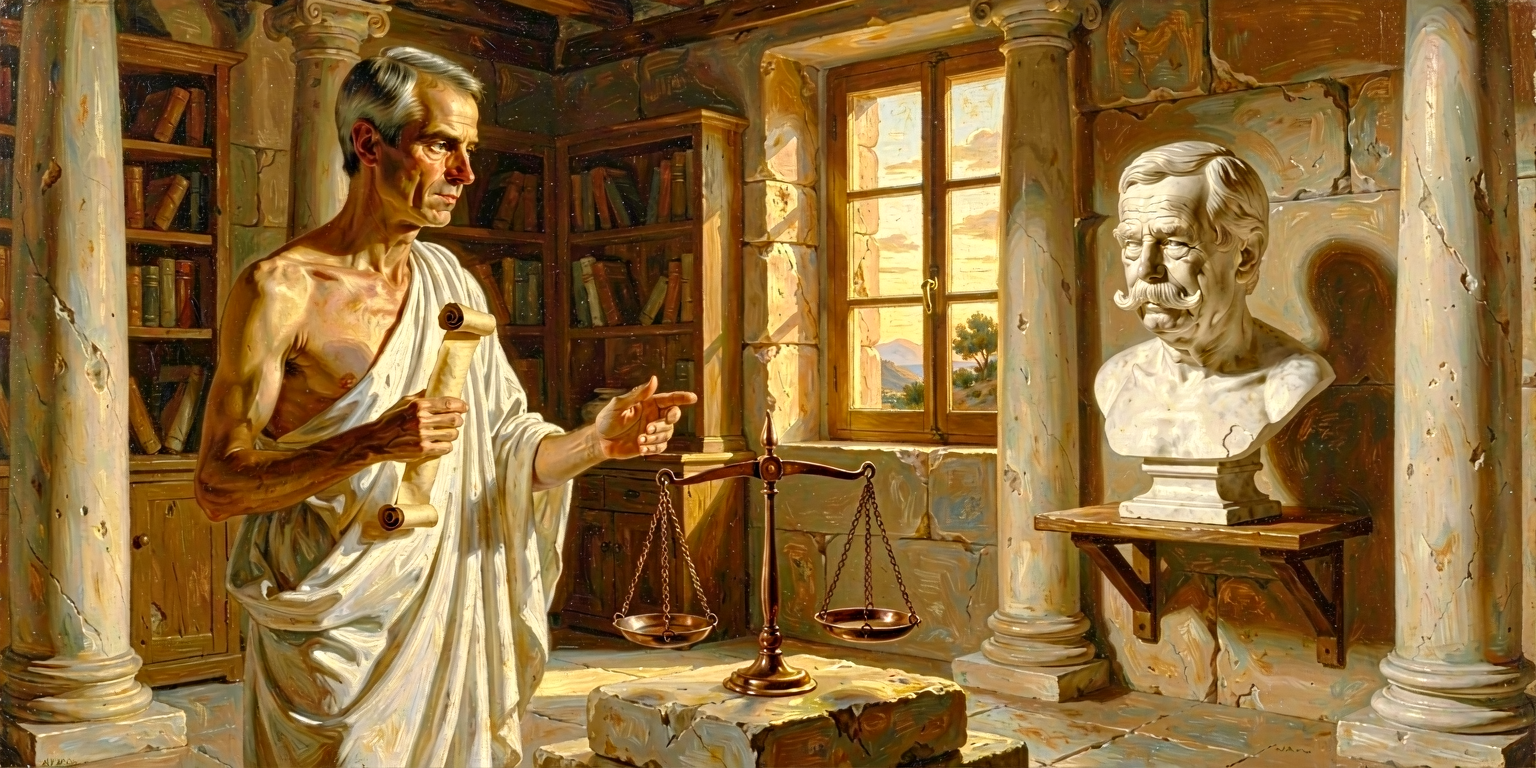
Carney with one finger on the lower pan of a small set of scales weighing it down with truth; a small bust of Havel on a shelf as quiet echo.
On Living Within the Truth – the scales weighed down.

🇨🇦 Original

What would it mean for middle powers to “live the truth”?

First, it means naming reality. Stop invoking “rules-based international order” as though it still functions as advertised. Call it what it is: a system of intensifying great power rivalry, where the most powerful pursue their interests using economic integration as coercion.

It means acting consistently, applying the same standards to allies and rivals. When middle powers criticize economic intimidation from one direction but stay silent when it comes from another, we are keeping the sign in the window.

It means building what we claim to believe in, rather than waiting for the old order to be restored. It means creating institutions and agreements that function as described.

And it means reducing the leverage that enables coercion. Building a strong domestic economy should always be every government’s immediate priority.

Diversification internationally is not just economic prudence; it is the material foundation for honest foreign policy, because countries earn the right to principled stands by reducing their vulnerability to retaliation.

🏛️ Translation

§58 τί ποτ’ οὖν ἐστι, ὦ οἱ συνελθόντες, ταῖς μέσην δύναμιν ἐχούσαις τὸ ἐν τῇ ἀληθείᾳ διαζῆν;

What, then, is it, O you here gathered, for those of middling power, to live within the truth?

§59 πρῶτον μέν ἐστι τὸ τὰ ὄντα ὀρθῶς ὀνομάζειν. παυσώμεθα τὴν ἐπὶ τοῖς κανόσι βεβηκυῖαν ἐκείνην τάξιν ἐπικαλούμενοι ὥσπερ ἔτι ποιοῦσαν ὅπερ πάλαι ἐκαπήλευεν· ὀνομάσωμεν αὐτὴν ὅπερ ἐστίν — ἁμίλλη γάρ ἐστι τῶν μέγιστον δυναμένων ἀεὶ αὐξανομένη, ἐν ᾗ οἱ ἰσχυρότατοι τὰ ἑαυτῶν συμφέροντα διώκουσι, τῇ τῶν χρημάτων κοινωνίᾳ ὡς ζυγῷ χρώμενοι.

First, it is to name what is, rightly. Let us stop calling upon that order which once stood firm upon the rules as though it still did what it once was hawking. Let us name it for what it is — a rivalry, ever increasing, among those of greatest power, in which the strongest pursue their own advantages and use the integration of money as a yoke.

§60 ἔπειτα ἐστὶ τὸ ὁμοίως ἀεὶ πράττειν καὶ τοὺς αὐτοὺς νόμους προσάγειν τοῖς τε συμμάχοις καὶ τοῖς ἐναντίοις. ὅταν γὰρ ἡμεῖς αἱ μέσην δύναμιν ἔχουσαι ἐπαιτιώμεθα μὲν τὴν ἀπὸ τῶν χρημάτων ἀπειλὴν ἑτέρωθεν ἐπιφερομένην, σιγῶμεν δὲ ὅταν ἄλλοθεν προσέρχηται, τότε ἔτι τὴν σανίδα ἐν τῷ παραθύρῳ ἔχομεν.

Next, it is always to act in the same way, and to apply the same standards to allies and to adversaries alike. For when we who hold the middling power lay accusation against the threat of money-power when it is brought from one side, but stay silent when it comes from another, then we still are keeping the sign in our window.

§61 τρίτον δ’ ἐστὶ τὸ οἰκοδομεῖν αὐτὰ ταῦτα ἃ φαμεν πιστεύειν, καὶ μὴ περιμένειν ἕως ἂν ἡ παλαιὰ τάξις αὖθις ἀποκατασταθῇ. ἔστι δὲ καὶ τὸ κατασκευάζειν θεσμοὺς καὶ συνθήκας τὰς ποιούσας ἃ ἐπαγγέλλονται.

Third, it is to build up those very things we say we believe in, and not to stand by waiting until the old order be restored. And it is also to fashion institutions and treaties that actually perform what they profess.

§62 τέταρτον δ’ ἐστὶ τὸ ἐλαττοῦν τὴν ῥοπὴν ᾗ ἀναγκάζειν ἔξεστι τοῖς ἐναντίοις — λέγω δὴ τὸ τὰ οἴκοι χρήματα ἰσχυρῶς κατασκευάζειν. καὶ τοῦτο πάσῃ ἀρχῇ ἐν πρώτοις ἐν φροντίδι δεῖ εἶναι τῶν πραγμάτων.

Fourth, it is to lessen the leverage by which the adversaries are able to compel us — I mean, to build up the things of money at home in strength. And this must be among the first concerns of every government’s affairs.

§63 καὶ μέντοι τὸ πρὸς πολλὰς πόλεις ἔξωθεν προσφέρεσθαι οὐ μόνον φρόνησίς τίς ἐστι χρηματική, ἀλλὰ καὶ θεμέλιόν τι τῆς πρὸς τὰ ἔξω εἰλικρινοῦς πολιτείας· τότε γὰρ ταῖς πόλεσιν ἔξεστι τὸ ἐπὶ τοῖς δικαίοις ἑστάναι, ὅταν πρὸς τὰς ἀντιπράξεις προτεταφρευμένοι ὦσιν.

And further, to engage with many states beyond one’s own is not only a kind of prudence in matters of money, but is also a foundation of a candid foreign policy: for states have it open to them to take their stand upon what is just only when they have been entrenched against the counter-strokes.

💬 Commentary

🤖 First pass

Introductory. The enumeration here — “First, it means naming reality. It means acting consistently. It means building what we claim to believe in. It means reducing the leverage that enables coercion” — is exactly the deliberative structure Demosthenes uses constantly. Greek likes to formalize Carney’s implicit “It means…” parallels with explicit ordinals: πρῶτον μέν, ἔπειτα, τρίτον, τέταρτον.

Commentary.

  • The truth-lie mirror in §58. Carney’s “live the truth” inverts Havel’s “living within the lie.” In §13 I rendered Havel’s phrase as τὸ ἐν ψεύδει διαζῆν. The Greek in §58 makes the inversion exact: τὸ ἐν τῇ ἀληθείᾳ διαζῆν. Same verb, same construction, opposite locative. The English does this echo too, but the Greek can preserve it perfectly because the phrase has been load-bearing throughout the whole speech. This is the kind of long-range verbal cooperation that makes translating a single speech across many turns more rewarding than working chunk-by-chunk in isolation; the early renderings keep paying off. The §58 question — what would it mean to live the truth? — is the deliberative opener that the four-fold list of §59§62 answers.
  • The numbered enumeration. Carney’s English uses repeated “It means…” — an implicit list. Greek formalizes this with explicit πρῶτον μέν / ἔπειτα / τρίτον δ’ / τέταρτον δ’, which is the standard Demosthenic-Aristotelian way to enumerate a substantive list. Demosthenes does this constantly in the deliberative speeches when laying out what Athens ought to do: “First, we must…; next, we must…; and third, what is most important….” The numbered form makes the argument feel decisional rather than rhetorical — the speech is now telling the audience what to do, item by item, as if writing legislation.
  • The sign in the window again, §60. Once the greengrocer’s σανίς is established (§12), it stays available across the whole speech. Carney calls it back in his English and the Greek matches: τότε ἔτι τὴν σανίδα ἐν τῷ παραθύρῳ ἔχομεν — then we still are keeping the sign in our window. The phrase is now functioning as a standing political accusation in the speech: whenever someone behaves inconsistently or accommodates power for convenience, they’re “keeping the sign up.” A clean instance of metaphor working as moral indictment.
  • ῥοπή again, §62. “Leverage” returns and stays in the same word — τὴν ῥοπὴν ᾗ ἀναγκάζειν ἔξεστι τοῖς ἐναντίοις. As with σανίς, once a translation choice is good enough to do duty across the speech, it should bear the weight of every recurrence. Demosthenic vocabulary works this way: a small set of key concept-words (αὐτονομία, σχῆμα, λόγος/ἔργον, τὰ οἴκοι/τὰ ἔξω, ῥοπή) appear and reappear, threading the argument together.
  • τὰ οἴκοι / τὰ ἔξω in §62. “Build a strong domestic economy” became τὸ τὰ οἴκοι χρήματα ἰσχυρῶς κατασκευάζειν — to build up the things of money at home in strength. The phrase τὰ οἴκοι (“the things at home”) is one of the most useful little workhorses in Demosthenes’ vocabulary; he sets it constantly against τὰ ἔξω (“the things abroad”) when arguing that Athens must attend to her own affairs before she can influence foreign ones. Carney’s argument is structurally identical: domestic economic strength is the foundation that makes foreign policy possible. The Greek phrasing fits his point so naturally that no torsion is needed.
  • One small confession. The translation of “principled stands” as τὸ ἐπὶ τοῖς δικαίοις ἑστάναι in §63to stand upon what is just — slightly overplays Carney’s hand. The English “principled” is mild; ἐπὶ τοῖς δικαίοις ἑστάναι (literally to stand upon the just things) is a strong moral commitment, the posture of someone refusing to compromise. I judged the slight intensification to be in keeping with the Demosthenic register; in a deliberative speech, you don’t say “principled,” you say “just.” But a more cautious translator might have preferred μετὰ τῶν δικαίων ἑστάναι or similar gentler phrasing.

(Sign-off: “The next stretch is Carney’s pivot back to Canada specifically — the praise-list. Shall I press on?”)

🤖🧐 Second pass

D13 — extended into §59. The rules-set keyword set (κανόσι not νόμοις) extends from §5, §15, §29 into §59: τὴν ἐπὶ τοῖς κανόσι βεβηκυῖαν ἐκείνην τάξιν (“that order which once stood firm upon the rules”). This is the fifth and final instance of the standing keyword in its full ἐπί + dative + βεβηκυῖα frame — a deliberate ring-back to §5’s opening characterization of the rules-based order.

D41§59 ζυγῷ extends the D15 coercion-yoke set. First-pass §59 had τῇ τῶν χρημάτων κοινωνίᾳ ὡς ἀνάγκῃ χρώμενοι, “using the integration of money as a compulsion.” Second-pass replaces with τῇ τῶν χρημάτων κοινωνίᾳ ὡς ζυγῷ χρώμενοι, “using the integration of money as a yoke.” This extends the ζυγός keyword set established at §20 (banking-as-yoke under D15); the yoke is now explicitly Carney’s analysis of how economic integration functions as coercion-by-instrument. Two instances in the speech: §20 and §59. (An earlier D43 extension into §62 was briefly ratified, then superseded on metaphor-coherence grounds — see D43 below.)

D42§59 “as advertised” as ἐκαπήλευεν (mercantile-cynical). First-pass had ὅπερ πάλαι ἐπηγγέλλετο, “what it once promised.” Second-pass replaces with ὅπερ πάλαι ἐκαπήλευεν, “what it once was peddling/hawking.” καπηλεύω is the verb of the small shopkeeper, the καπηλός — the very word that landed back in §12 for the greengrocer with his sign. To say the rules-based order was hawking its claims is to put it back in the same vendor’s-window register where the speech’s whole moral indictment was framed: the order was selling something the buyer knew was not what was advertised. The verb is mercantile-cynical in a way ἐπαγγέλλομαι (which can simply mean announce, profess) is not. And it makes the §59 line a structural callback to §12 even before the §60 σανίς callback.

D43§62 ῥωπή + ζυγός together (briefly ratified, superseded). A second-pass attempt extended the ζυγός keyword into §62 alongside ῥωπή: τὴν ῥοπὴν καὶ τὸν ζυγὸν οἷς ἀναγκάζειν ἔξεστι (“the leverage and the yoke by which they can compel”). On reflection in this session the extension was withdrawn on metaphor-coherence grounds. ζυγός as established by D15/D41 carries the yoke-of-bondage sense (the wooden yoke laid across an ox’s neck), while ῥωπή is the tilt of a balance-pan — two physically incompatible images that the καί-coordination asks the reader to hold at once. Demosthenes does pile up coercion-images for cumulative weight (ζυγὸν καὶ δουλείαν, πέδαι καὶ δεσμά), but always within a single metaphor family; yoke + balance-tilt is not the same family, and the §62 hinge does not need keyword propagation at the cost of metaphor-mix. The first-pass reading τὴν ῥοπὴν ᾗ ἀναγκάζειν ἔξεστι has been restored. The coercion-as-yoke set reduces from three members to two, §20 and §59; ζυγός as standing keyword now lives clean there without being forced into a metaphor-mixed environment at §62. The earlier “ῥοπή again, §62” first-pass note above already documents the single-noun rendering on its own register-statistical grounds; that note now describes the speech as it stands rather than as it briefly stood.

D44§63 “honest foreign policy” as εἰλικρινής (not ἀληθής). First-pass had ἀληθοῦς, “true.” Second-pass replaces with εἰλικρινοῦς, “candid, unmixed, undisguised.” εἰλικρινής carries the etymological sense of judged in the sunlight — what survives full daylight scrutiny. It is the right register for a candid foreign policy: not just one that speaks truths, but one that has nothing to hide. The contrast is with the σχῆμα τῆς αὐτονομίας (§55) which was judged in the dark, kept out of full view.

D45§63 “entrenched against retaliation” as προτεταφρευμένοι ὦσι. First-pass had ἐλάττονα ἀσθένειαν ποιήσωσιν, “make less weakness for themselves” — a vague periphrasis. Second-pass replaces with πρὸς τὰς ἀντιπράξεις προτεταφρευμένοι ὦσι, “have been entrenched against the counter-strokes.” προτεταφρεύω is the military verb for digging defensive trenches in advance of an expected attack (from τάφρος, “trench”). The image is concrete: a polis that has dug its defensive trenches before the enemy arrives is in a position to refuse the enemy’s terms. Carney’s “reducing their vulnerability to retaliation” becomes, in the Greek, the act of pre-emptive trenching — a more vivid and more military picture than the English.


XV. On the Sign We Now Take Down (§64–§67)

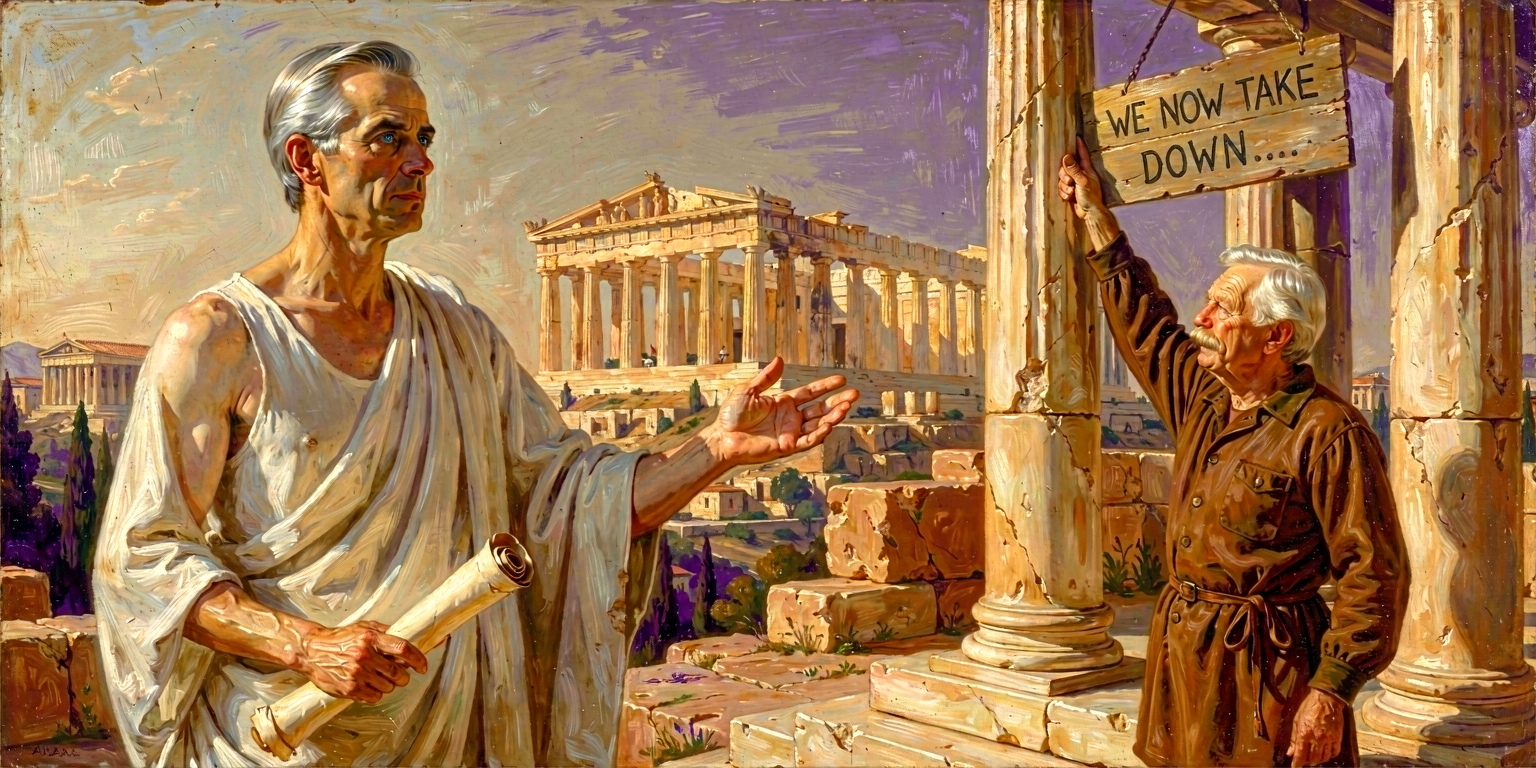
Carney on the bema acknowledging Vaclav Havel in the background reaching up to take down a hanging sign from a stone column; the dissident gesture enacted, callback to Post III.
On the Sign We Now Take Down – Havel returns and enacts the gesture.

🇨🇦 Original

Canada has what the world wants. We are an energy superpower. We hold vast reserves of critical minerals. We have the most educated population in the world. Our pension funds are amongst the world’s largest and most sophisticated investors. In other words, we have capital, talent, and a government with the immense fiscal capacity to act decisively.

And we have the values to which many others aspire.

Canada is a pluralistic society that works. Our public square is loud, diverse, and free. Canadians remain committed to sustainability.

We are a stable, reliable partner – in a world that is anything but — a partner that builds and values relationships for the long term.

Canada has something else: a recognition of what is happening and a determination to act accordingly.

We understand that this rupture calls for more than adaptation. It calls for honesty about the world as it is.

We are taking the sign out of the window.

We know the old order is not coming back. We should not mourn it. Nostalgia is not a strategy.

But we believe that from the fracture, we can build something better, stronger, and more just.

This is the task of the middle powers, the countries that have the most to lose from a world of fortresses and the most to gain from a world of genuine cooperation.

🏛️ Translation

§64 αὕτη τοίνυν, ὦ οἱ συνελθόντες, ἡ Καναδία τοιαῦτα ἔχει οἵων ἡ πᾶσα οἰκουμένη δεῖται. ἐν μὲν γὰρ τῇ τῶν καυσίμων εὐπορίᾳ ὑπερβαλλόντως δυνάμεθα, τὰ δ’ ἀναγκαιότατα τῶν ἐκ γῆς μετάλλων ἐν πλήθει κεκτήμεθα, τὸν δὲ δῆμον ἔχομεν τὸν πάντων ἀνθρώπων πεπαιδευμένον μάλιστα. τὰ δ’ ἐπὶ γῆρας ταμιεῖα τὰ ἡμέτερα ἐν τοῖς μεγίστοις τε καὶ σοφωτάτοις τέτακται τῶν κατὰ τὴν οἰκουμένην τὰ χρήματα διοικούντων. ἁπλῶς εἰπεῖν· καὶ χρήματα ἡμῖν καὶ φρόνησις πάρεστιν. ἔτι δ’ ἔχομεν ἀρχὴν χρημάτων εὐποροτάτην οὖσαν ὥστε καιρίως δύνασθαι πράττειν. καὶ ταῦτα τοίνυν τὰ τιμώμενα ἡμῖν ὑπάρχει, ὧν πολλοὶ ἕτεροι ἐφίενται.

This Canada of ours, then, O you here gathered, possesses such things as the whole inhabited world stands in need of. For in the abundance of fuel-resources we have surpassing strength; the most essential of things mined from the earth we hold in abundance; and we have the people most educated of all human beings. Our treasuries set aside for old age are ranked among the greatest and wisest of those that manage money across the inhabited world. To put it plainly: both wealth and prudence are present with us. Further, we have a government most well-supplied with funds, so as to be able to act when the time calls for it. And these very things we hold honored — the things toward which many others aspire.

§65 ἔτι δ’ ἐστὶν ἡ ἡμετέρα πολιτεία πολύφωνος μέν, ἐνεργοῦσα δὲ καλῶς. ἡ ἀγορὰ ἡ ἡμετέρα θορυβώδης, ποικίλη, ἐλευθέρα. καὶ ἐμμένομεν, ὦ οἱ συνελθόντες, τῇ τῆς γῆς οἰκονομίᾳ. καὶ κοινωνοί ἐσμεν βέβαιοί τε καὶ πιστοὶ ἐν οἰκουμένῃ οὐδαμῇ τοιαύτῃ — κοινωνοὶ οἷοι τὰς κοινωνίας οἰκοδομεῖν καὶ τιμᾶν πρὸς τὸ διηνεκές.

And further, our way of life is pluralistic, yet works well. Our public square is loud, many-coloured, free. And we abide, O you here gathered, by the husbandry of the earth. We are partners steady and trustworthy in an inhabited world that is in no way such — partners of the sort that build and honor their partnerships for the long term.

§66 καὶ μέντοι ἕτερόν τι, ὦ οἱ συνελθόντες, ἡμῖν ὑπάρχει· τῶν τε γὰρ παρόντων αἴσθησιν ἔχομεν, καὶ τὴν προθυμίαν τοῦ τὰ τοῖς συμβαίνουσι προσήκοντα πράττειν. γιγνώσκομεν γὰρ ὅτι τὸ ῥῆγμα τοῦτο πλεόνων δεῖται ἢ τοῦ μόνον τοῖς πράγμασιν ἁρμόσασθαι· δεῖται γὰρ καὶ τοῦ τὰ ὄντα ὁποῖά ἐστιν ἀληθῶς λέγειν.

And yet one more thing, O you here gathered, belongs to us: we have a perception of what is upon us, and a resolve to do what is fitting to circumstances. For we know that this rupture demands more than merely accommodating ourselves to events; it demands also the speaking of the truth — concerning things, just as they are.

§67 τὴν τοίνυν σανίδα ἐκ τοῦ παραθύρου καθαιροῦμεν. ἴσμεν γὰρ τὴν παλαιὰν ἐκείνην τάξιν οὐχ ἥξουσαν αὖθις. μηδ’ αὐτὴν πενθῶμεν· οὐ γὰρ ἐν τῷ τῶν παρελθόντων πόθῳ ἡ σωτηρία. ἀλλὰ πιστεύομεν ἐκ τοῦ ῥήγματος αὐτοῦ μεῖζόν τι καὶ βέλτιον καὶ ἰσχυρότερον καὶ δικαιότερον οἰκοδομῆσαι δυνάμεθα.

And so, we are taking the sign down from the window. For we know that the old order is not coming again. Nor let us mourn it: salvation does not lie in longing for what is past. We believe rather that from the rupture itself we are able to build something greater, and better, and stronger, and more just.

💬 Commentary

🤖 First pass

Introductory. This passage gives Greek something it loves: the praise-list. It’s structurally identical to what an Athenian orator does when enumerating his state’s strengths — Pericles in Thucydides 2, Demosthenes in On the Crown — and it lands the third callback to the greengrocer’s sign, which by now has become the structural metaphor of the entire speech.

Commentary.

  • The σανίς callback in §67. This is the third time the greengrocer’s board has returned, after §12, §18, and §60. The metaphor has been doing structural work for the entire speech — Carney introduces it (Havel), implicates Canada in it (“we too placed our sign”), uses it to indict inconsistent moral standards (“we are still keeping the sign in the window”), and now finally redeems it: τὴν σανίδα ἐκ τοῦ παραθύρου καθαιροῦμεν — we are taking the sign down from the window. The Greek can render this with the same noun and a verb of removal that physically reverses the verb of placing (τίθεμεν / καθαιροῦμεν). A four-paragraph sequence (introduction → complicity → indictment → reversal) which carries the moral architecture of the speech, preserved exactly in the Greek through a single recurring image. This is the kind of long-range work that classical rhetoricians built whole orations around, and Carney has built it into this one.
  • The tetracolon in §67. μεῖζόν τι καὶ βέλτιον καὶ ἰσχυρότερον καὶ δικαιότερον — greater, better, stronger, more just. Four comparative adjectives in succession, all in the same case and gender, each carrying weight. This is one of the rhetorical effects Greek does as well as any language: rising parallelism in the comparative degree, building toward δικαιότερον (more just) as the climactic value. Carney’s English gives me the exact four-element structure to render directly. The final adjective being δικαιότερον — the most fully just — is the move that turns the construction from a political claim into a moral one. The speech’s whole argument has been preparing this word.
  • πόθος in §67. “Nostalgia is not a strategy” is, in English, a near-cliché — the word nostalgia has cooled in modern usage into something almost flippant. Greek’s word for the same idea, πόθος, carries far more weight: it is the longing for what is absent (lost loved ones, distant homes, vanished youth), the emotional core of Greek elegiac and tragic vocabulary. So οὐ γὰρ ἐν τῷ τῶν παρελθόντων πόθῳ ἡ σωτηρία — salvation does not lie in longing for what is past — is, in Greek, slightly heavier and slightly sadder than the English. It implicitly acknowledges that the longing is a real and serious feeling worth respecting; it just is not where rescue comes from. The Greek hits a more reflective note than Carney’s English does, and I think for the better.
  • The tricolon of the public square in §65 (first-pass form). “Loud, diverse and free” became θορυβώδης, ποικίλη, ἐλευθέρα — three adjectives in asyndeton (no connectives between them), each ending in a long syllable, each of similar prosodic weight. Greek prose loves this rhythm. Pericles’ funeral oration in Thucydides 2 uses asyndetic tricola of adjectives constantly when praising Athenian institutions. So when Carney’s Canadian “public square” gets described with three free-standing adjectives, the Greek slot for the description is already cut, perfectly sized, and waiting. (See D46 below for the pluralistic-vs-diverse split in the second pass.)
  • The pension-fund problem in §64. Ancient Greece had no pension system — the elderly were supported by family, ἐράνοι (mutual societies), or private trusts. There is no classical Greek noun for “pension fund.” I went with τὰ ἐπὶ γῆρας ταμιεῖα — treasuries set aside for old age — which is a periphrasis intelligible to any Athenian. It’s a touch wordy but it doesn’t require importing a transliterated abstraction. This is the same approach I took with WTO/UN/COP in §22 and with AI in §41/§49: describe the function, not the name. The cost is brevity; the benefit is that the speech stays in Greek rather than becoming Greek-with-modern-loan-words pasted in.
  • φρόνησις returns in §64. Carney’s “capital, talent” — wealth and human ability — becomes χρήματα καὶ φρόνησις. I used φρόνησις back in §36 for “pragmatic”; bringing it back here is deliberate, because “talent” in Carney’s English is doing similar lifting: it names a practical, judicious, productive capacity rather than mere intelligence or technical skill. φρόνησις threads through.

(Sign-off: “The final stretch is short and rhetorical — the peroration. That’s the close of the speech, and it deserves the most careful work of all. Shall we finish it?”)

🤖🧐 Second pass

D5 base / D7 swell — §64’s “superpower” slot. The energy keyword set (D5) was established at §20, §22, §41 as the strict uniform form τοῖς τῶν καυσίμων πόροις. At §64 — the praise-list position where Carney’s English uses energy superpower — the second pass takes the local εὐπορία-swell (D7): ἐν μὲν γὰρ τῇ τῶν καυσίμων εὐπορίᾳ ὑπερβαλλόντως δυνάμεθα, “in the abundance of fuel-resources we have surpassing strength.” εὐπορία preserves the πορ- root from the standing keyword πόρος while supplying the abundance sense Carney’s “superpower” claim wants, and alliterates with the ἀρχὴν χρημάτων εὐποροτάτην later in the same §64. The uniformity loss is one slot of four; the climactic-position rhetorical lift is judged the better trade.

D46§65 πολύφωνος (pluralistic) and ποικίλη (diverse) split. First-pass §65 had the asyndetic tricolon θορυβώδης, ποικίλη, ἐλευθέρα for “loud, diverse, free,” and used the same ποικίλη again, separately, for “pluralistic society.” Second pass splits the two: the pluralistic society becomes πολύφωνος (literally many-voiced), and the diverse in the asyndetic tricolon keeps ποικίλη (many-coloured). The split distinguishes two senses Carney’s English glides over: pluralistic names the structure of a society with multiple constitutive voices; diverse names the texture of variety within it. πολύφωνος carries the structural sense; ποικίλη the textural. Two different abstractions in one paragraph, now correctly distinguished.

D47§65 sustainability as τῇ τῆς γῆς οἰκονομίᾳ. First-pass had πρὸς τὸ διηνεκὲς εὖ πράττειν περὶ τὴν γῆν, “to fare well with respect to the earth, looking to the long stretch ahead” — a periphrastic gesture toward sustainability. Second-pass replaces with τῇ τῆς γῆς οἰκονομίᾳ, “by the husbandry of the earth.” οἰκονομία in classical Greek is the management of an estate (originally the οἶκος, the household); applied to the earth, it becomes the management of the earthly household — which is, etymologically, eco-nomy in its original sense. Sustainability becomes a single noun-phrase rather than a wordy periphrasis, and the noun-phrase happens to be the etymological root of the modern term, so a Greek-aware reader hears the modern concept land in its own ancestral vocabulary.

D48§65 partners as κοινωνοί (extends D23). First-pass §65 used σύμμαχοι for “partners,” consistent with the military-treaty sense σύμμαχος has elsewhere in the speech. Second-pass replaces with κοινωνοί, extending the D23 keyword distinction from §36 (where “every partner” became οὐ πᾶς κοινωνός). The §65 sentence “we are partners steady and trustworthy” describes Canada’s broader-than-military relationships — trade, investment, culture, long-term commitments. κοινωνοί is the right register; σύμμαχος is reserved for the strictly military alliances. The decision propagates the broader-partner vocabulary through both ends of the speech (§36 and §65).

D8 — quotidian kernel at §65, §66. ὦ οἱ συνελθόντες throughout this batch.


XVI. Peroration (§68–§70)

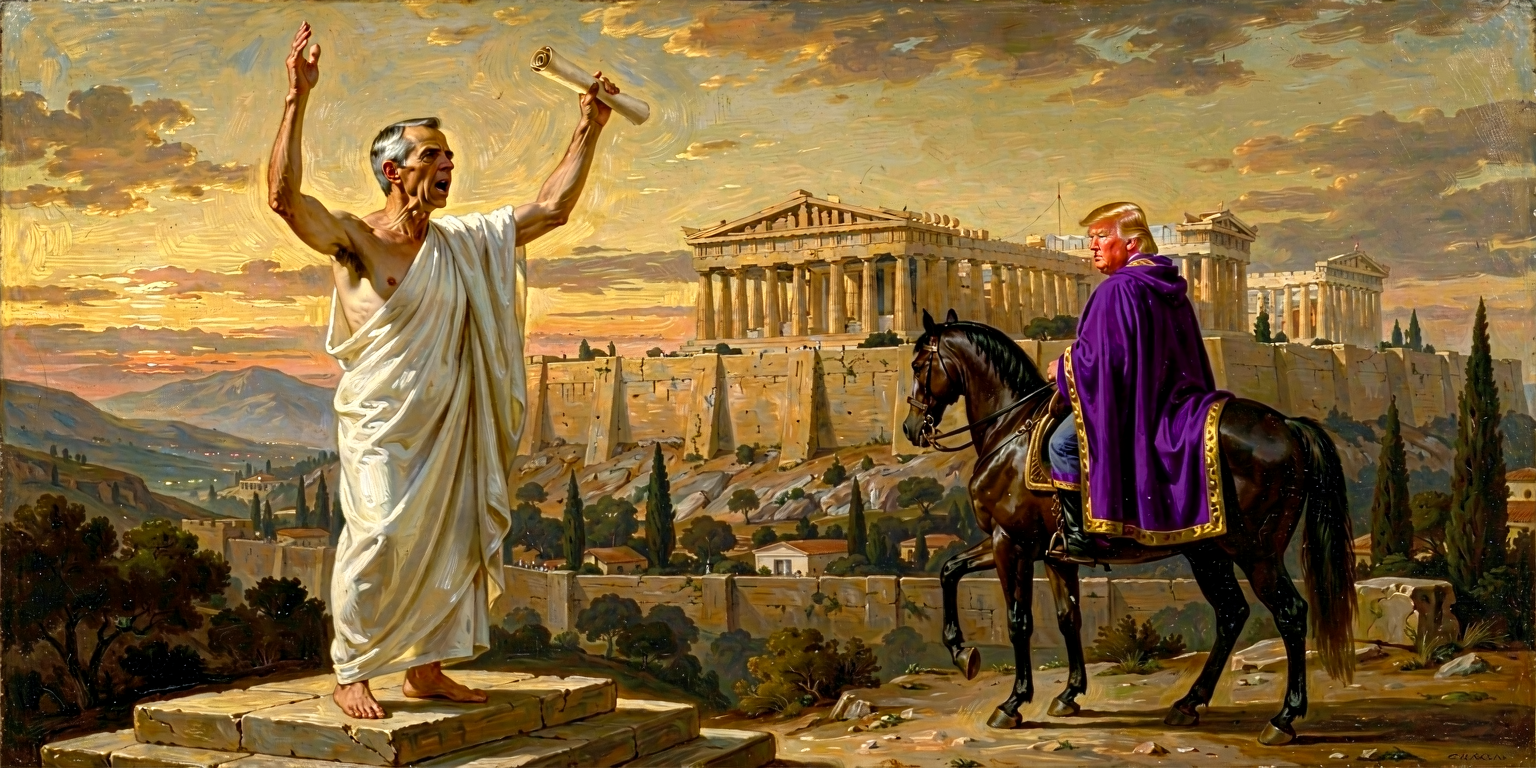
Carney in peroration stance on the bema with both arms raised in a closing gesture above his head, scroll catching the light; Trump-Philip distant but turning his horse away; ring-back to the cover.
Peroration – the closing gesture, the ring back to the opening.

🇨🇦 Original

The powerful have their power.

But we have something too – the capacity to stop pretending, to name reality, to build our strength at home, and to act together.

That is Canada’s path. We choose it openly and confidently.

And it is a path wide open to any country willing to take it with us.

Thank you very much.

🏛️ Translation

§68 οἱ μὲν δυνατοὶ τὰ δυνατὰ πράσσουσιν.

The powerful do what they can.

§69 ἡμῖν δὲ ἕτερόν τι, ὦ ἄνδρες τε καὶ γυναῖκες οἱ ἐν Δαυῷ συνελθόντες, ἔστιν· δυνάμεθα γὰρ παύσασθαι μὲν τοῦ ὑποκρίνεσθαι, τὰ δ’ ὄντα ὀρθῶς ὀνομάζειν, καὶ τὰ οἴκοι κατασκευάζειν ἰσχυρῶς, καὶ κοινῇ μετ’ ἀλλήλων πράττειν.

But to us, men and women gathered at Davos, there belongs something else: for we are able to stop performing, to name rightly what is, to build up the things at home in strength, and to act in common with one another.

§70 αὕτη τοίνυν ἡ τῆς Καναδίας ὁδός. ταύτην ἡμεῖς φανερῶς τε καὶ θαρροῦντες αἱρούμεθα· ἀνέῳκται δ’ εὐρεῖα πᾶσιν ὁπόσοι ἂν ἐθέλωσι μεθ’ ἡμῶν συμπορεύεσθαι. πολλὴν δ’ ὑμῖν, ὦ οἱ συνελθόντες, χάριν ἔχω.

This, then, is the path of Canada. This we choose openly, and with courage; and it stands open, wide, to all who may be willing to walk it together with us. I owe you, O you here gathered, deep thanks.

💬 Commentary

🤖 First pass

Introductory. The close. Three short paragraphs that gather the whole speech into themselves — and Greek has resources here that English does not, because the peroration’s job is to recapitulate, and the threading I’ve been doing throughout finally cashes out.

Commentary.

  • The ring composition (first-pass reading). The speech opened, in §1, with Πολλὴν, ὦ Λάρρι, χάριν σοι ἔχω — much thanks I owe you, Larry. It closes, in §70, with πολλὴν δ’ ὑμῖν, ὦ ἄνδρες, χάριν ἔχω — I owe you, gentlemen, deep thanks. Same noun, same verb, same construction, opening and closing matched. Carney‘s English does this too — both the opening and the closing are “thank you very much” — but in Greek the parallel is exact down to the case morphology, and it functions as classical ring composition: the way DemosthenesOn the Crown opens with a prayer and ends with one. (This reading was superseded in the second pass; the genuine ring is Thucydidean, §5 ↔︎ §68§69, with the courtesies as non-load-bearing frame. See D3, D4 below; and Note C.)

  • The four-part peroration in §69. The single most satisfying sentence in the whole project, because four parallel infinitives carry four separate threads of the speech, each of which has been doing structural work since early on:

    • παύσασθαι τοῦ ὑποκρίνεσθαιstop performing. This calls back to §14 (the strength of tyranny depends on ὑποκρίνεσθαι, on everyone playing the part) and to §55 (σχῆμα τῆς αὐτονομίας — performance of sovereignty).
    • τὰ ὄντα ὀρθῶς ὀνομάζεινname what is rightly. This is an exact verbal callback to §59, where Carney’s “naming reality” became the same phrase.
    • τὰ οἴκοι κατασκευάζειν ἰσχυρῶςbuild the things at home in strength. The τὰ οἴκοι / τὰ ἔξω opposition has been threaded from §40, §41, and §62.
    • κοινῇ μετ’ ἀλλήλων πράττεινact in common with one another. The κοινῇ πράττειν call is back from §52, the table/menu antithesis.

    So one sentence — six words plus four infinitive clauses — does the job of an entire summary. This is what a peroration is supposed to do, and Greek’s particle-and-coordination apparatus (μέν / δέ / καί / καί) makes it almost mechanical to construct, once the threads have been laid.

  • The brevity of §68 (first-pass form). Six English words — the powerful have their power — became six Greek words: οἱ μὲν δυνατοὶ τὴν δύναμιν ἔχουσιν. Demosthenes loves these short bare clauses at the structural hinges of a speech. The figura etymologica1 between δυνατοί and δύναμις makes the sentence almost tautological, and that tautology is the rhetorical point. There is nothing more to say about hegemons than that they have hegemony. The brevity is the verdict. (Superseded in the second pass under D6, which makes the line audibly Thucydidean — see below.)

  • θαρροῦντες in §70. “Confidently” became θαρροῦντες — with courage, but with a particular kind of courage. θάρρος in Greek is not bravado; it is the steady confidence of someone whose ground is firm beneath him, who has reasons to be unafraid. Demosthenes contrasts θάρρος regularly with both ἀνδρεία (raw bravery in the face of danger) and θρασύτης (rashness). The right register for Carney’s claim is precisely θάρρος: not bluster, not heroism, but the composure of someone who has thought through what is required and decided to do it. The word is small but it puts Canada into Demosthenes’ precise emotional category for civic decisiveness.

🤖🧐 Second pass

D3 — the ring is Thucydidean, not phatic. The first-pass reading took the courtesy at §70 as the closing of a ring opened at §1. Second-pass supersedes: the Latin salutation of §1 and the Greek valediction of §70 are phatic thresholds, mirror-image in being equally perfunctory; neither carries structural weight, and the diglossic apparatus they bound is a frame around the oration rather than a member of it.

The genuine ring is internal to the Greek and is both intellectual and (under D6) verbal: the speech proper opens at §5 by quoting Thucydides 5.89 verbatim (δυνατὰ μὲν οἱ προύχοντες πράσσουσιν, οἱ δὲ ἀσθενεῖς ξυγχωροῦσιν) and at §6 frames that maxim as presented in the guise of necessity (ἀναγκαῖον, ἄφυκτον). The ring closes audibly at §68 with the line οἱ μὲν δυνατοὶ τὰ δυνατὰ πράσσουσινThucydides’ first clause echoed near-verbatim (δυνατά and πράσσουσιν preserved from the original) — and the substantive refutation comes at §69 in the form ἡμῖν δὲ ἕτερόν τι ἔστιν…, “but to us, something else belongs…” — conceding that the strong do what they can, refuting that the weak must merely yield, the refutation enacted through the four infinitives of §69.

The Thucydidean stamp at §68 makes the ring close audible to the reader who knows Thucydides 5.89; the substantive refutation at §69 makes it argued. The substance of the ring is the speech’s own thesis, that the Melian logic is not destiny. That the authority refuted is itself Greek, and is refuted in Greek, is not incidental to the effect.

D4§70 stays perfunctory. Given the ring is Thucydidean (D3), the §70 valediction is not asked to do structural work. It remains a perfunctory closing thanks, mirror-image to the §1 salutation across the diglossic frame. No attempt is made to render it weightier than Carney’s English “thank you very much” actually is.

D6 — audible Melian echo at §68. First-pass §68 read οἱ μὲν δυνατοὶ τὴν δύναμιν ἔχουσιν, “the powerful have their power” — figura etymologica on the δύνα- root, but lexically distant from Thucydides. Second-pass replaces with οἱ μὲν δυνατοὶ τὰ δυνατὰ πράσσουσιν, “the powerful do what they can” — Thucydides 5.89’s first clause echoed near-verbatim. The Thucydides line in full is δυνατὰ μὲν οἱ προύχοντες πράσσουσιν, οἱ δὲ ἀσθενεῖς ξυγχωροῦσιν — literally, “the prominent do what is possible, the weak yield.”

A note for the ungreeked: in Greek, the powerful and the possible are the same adjective, δυνατός — δυνατοί (masculine plural) means “the powerful, the capable ones”; δυνατά (neuter plural) means “the possible things, what is possible.” This double duty is precisely what makes a figura etymologica available at §68 in the first place: the line is built out of the same word in two grammatical genders, so the doubling registers in the listener’s ear as repetition rather than as mere semantic similarity.

Both δυνατά and πράσσουσιν are preserved from the Thucydides original; what changes is which word in the original is left untouched (the verb πράσσουσιν and the neuter object δυνατά) and which is replaced (Thucydides’ οἱ προύχοντες, “those who excel / the prominent,” becomes οἱ δυνατοί, “the powerful”). The figura that the first-pass had pursued for its own sake (the triple δυνα- of οἱ δυνατοὶ τὴν δύναμιν ἔχουσιν) is preserved in a different form: the same root now stretched across subject and object (δυνατοί / δυνατά) rather than across subject and object-of-have (δυνατοί / δύναμιν).

On the substitution itself, candor is owed: it is not the case that the second-pass form was reached by going to Thucydides’ Greek and editing οἱ προύχοντες outward for figura-etymologica reasons. The trigger was Carney’s own English. Carney’s §68 reads “the strong do what they can” — a modernizing paraphrase of Thucydides — and “strong / powerful” maps in Greek to οἱ δυνατοί before οἱ προύχοντες even comes up; the Carney-driven lexeme was on the table first. Once οἱ δυνατοί was on the table the doubling with δυνατά became a rhetorical bonus the second-pass form leans into; the etymological play is retrofitted, not the seed.

The pure-Thucydides path — οἱ προύχοντες πράσσουσιν, restoring the original verbatim — was available, and the speech bypasses it because Carney’s English-side modernization had already chosen the lexeme. The Greek that lands is the intersection between Carney’s word and Thucydides’ word, not Thucydides’ word alone. The ring-close that D3 names as the architectural center of the speech is now also lexically audible: a reader who recognizes 5.89 hears the echo without needing the rendering glossed. The brevity, the etymological play, and the tautological verdict-character of the first-pass form are all preserved; what is added is the verbal Thucydidean stamp.

D8 — the full anchor returns at §69. The third and final deployment of the full anchor vocative: ὦ ἄνδρες τε καὶ γυναῖκες οἱ ἐν Δαυῷ συνελθόντες. The full anchor was deployed at §5 (the Thucydides ring-head), §52 (the table/menu hinge), and now §69 (the four-infinitive refutation that closes the Thucydidean ring). Three structural moments, all marked by the same full vocative. The architecture is audible at the level of address as well as at the level of argument.

D8§70 quotidian kernel. ὦ οἱ συνελθόντες for the closing thanks; the anchor was just deployed at §69, and the courtesy of §70 is deliberately under-marked.

🤖 First-pass retrospective

Looking back across all seventy paragraphs. A few sustained translation choices proved to do most of the heavy lifting: τὰ τιμώμενα for values; σχῆμα / ἔργῳ for the appearance / reality antithesis; τὰ οἴκοι / τὰ ἔξω for domestic / foreign; ὑποκρίνεσθαι for performing; κοινῇ πράττειν for acting together; ἡ σανίς (the sign in the window) — the most visible single image, present in §12, §18, §60, §67; οἱ μέγιστον δυνάμενοι / αἱ μέσην δύναμιν ἔχουσαι — the standing pair for great powers vs middle powers.

A few terms required real periphrasis and never settled fully in the first pass — climate, sustainability, artificial intelligence, cloud-scale corporation — and most were addressed in the second pass by single-noun substitution or tighter classical-Greek compression (D17 αἰθρίας διαφυλακή for COP/climate; D47 γῆς οἰκονομία for sustainability; D28 ἔλλογα ὄργανα for AI). The catalogue of Demosthenic windfalls that Carney did not intend — moments when the Greek vocabulary loaded an editorial meaning unavailable to the modern author — is collected at the 2 footnote.


Footnotes


  1. Figura etymologica is the rhetorical figure of placing two words from the same root next to each other so that the repeated stem itself becomes the point — the able have ability, English to live a life, Latin vitam vivere. Classical rhetoricians named the figure for exactly this effect: the doubling makes the etymological identity of the words audible to the listener and converts what would otherwise be a tautology into a deliberate rhetorical compression. In §68’s first-pass form, the figure was δυνατοί … δύναμιν ἔχουσιν, “the powerful have power”; in the second-pass form (under D6) it is δυνατοί … δυνατὰ πράσσουσιν, with the same root δυνα- doubled across subject and object instead of across subject and possession.↩︎

  2. Demosthenic windfall [editorial coinage of this commentary] — the term-of-art this commentary uses for places where the Greek vocabulary loaded an editorial meaning that the modern author could not have known he was buying. Not an established philological term; coined for this rendering to name the phenomenon. Standing examples:

    • προμηθεῖσθαι for risk management in §30 — Demosthenes’ own scolding-word to Athens, so the line lands as the Demosthenic refrain itself rather than as bland translation.
    • ὑποτέλεια for subordination in §55 — the technical Delian-League term for tribute-paying subjection, so the line activates the Athenian-empire history Carney could not have intended.
    • ἡγεμονία for hegemony in §17 — already carries its Delian-League ambiguity, so “American hegemony” reads as half a critique in the Greek.

    The windfalls are the moments where translating into a load-bearing classical vocabulary adds an editorial layer Carney could not have known he was buying. They are not deliberate authorial choices; they are gifts of the target language.↩︎