
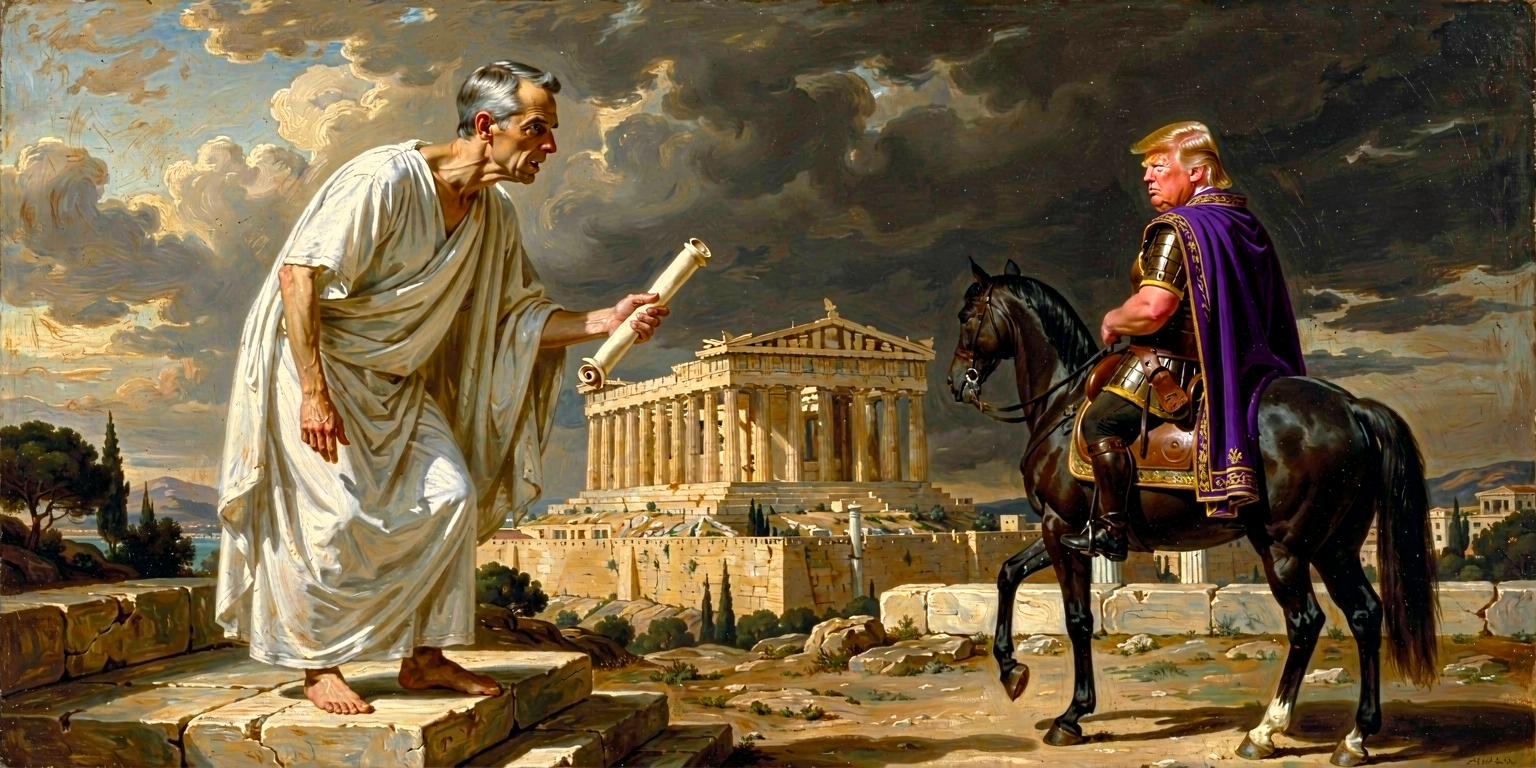
🇨🇦 Original
For decades, countries like Canada prospered under what we called the rules-based international order. We joined its institutions, we praised its principles, we benefited from its predictability. And because of that, we could pursue values-based foreign policies under its protection.
We knew the story of the international rules-based order was partially false. That the strongest would exempt themselves when convenient. That trade rules were enforced asymmetrically. And we knew that international law applied with varying rigour depending on the identity of the accused or the victim.
This fiction was useful, and American hegemony, in particular, helped provide public goods: open sea lanes, a stable financial system, collective security, and support for frameworks for resolving disputes.
So, we placed the sign in the window. We participated in the rituals, and we largely avoided calling out the gaps between rhetoric and reality.
This bargain no longer works.
Let me be direct. We are in the midst of a rupture, not a transition.
🏛️ Translation
§15 ἐπὶ μὲν γὰρ πολλὰς γενεάς, ὦ οἱ συνελθόντες, πόλεις τινὲς οἷον ἡ Καναδία ηὐδαιμόνουν ὑπὸ τῇ τοιαύτῃ τάξει ἣν ἐπὶ τοῖς κανόσι βεβηκυῖαν ἐκαλοῦμεν. καὶ τῶν θεσμῶν αὐτῆς μετέσχομεν, καὶ τὰς ἀρχὰς ἐπῃνοῦμεν, καὶ τῷ προγνωστῷ τῶν μελλόντων ὠνινάμεθα· καὶ διὰ ταῦτα ἐξῆν ἡμῖν, ὑπὸ τῇ ταύτης σκέπῃ, τὰ πρὸς τοὺς ἔξω πράττειν συνῳδῶς τοῖς ἡμετέροις δικαίοις.
For over many generations, O you here gathered, certain states such as Canada prospered beneath that order which we called one that stood firm upon the rules. We took part in its institutions, we praised its principles, we drew benefit from its forecasting of what lay ahead; and because of these things it was open to us, beneath its shelter, to conduct our affairs toward those outside in harmony with our own sense of right.
§16 καὶ μὴν ᾔδειμεν ὡς ὁ τῆς τοιαύτης τάξεως μῦθος οὐ πάντῃ ἀληθὴς ἦν, ἀλλ’ ἔστιν ᾗ ἐψεύδετο. οἱ γὰρ μέγιστον ἰσχύοντες, ὁπότε καὶ συμφέροι, ἑαυτοὺς τῶν νόμων ἠφίεσαν, καὶ οἱ περὶ τῆς ἐμπορίας νόμοι οὐχ ὁμοίως πρὸς πάντας ἐκυροῦντο. ᾔδειμεν δὲ καὶ ὡς τὰ κοινὰ τῶν πόλεων νόμιμα ἄλλοτε ἄλλως ἡρμόζετο, διαφέροντος τοῦ τε φεύγοντος καὶ τοῦ πάσχοντος.
And indeed we knew that the story of such an order was not wholly true, but had its places where it lied. For those of greatest strength, whenever it suited them, would exempt themselves from the laws; and the rules of commerce were not enforced with equal weight against everyone. We knew too that the common laws of states one with another were applied now in one fashion, now in another — depending on who the defendant was, and who the victim.
§17 ἀλλ’ ὅμως χρήσιμος οὗτος ὁ μῦθος ἦν· καὶ ἡ τῶν Ἀμερικανῶν μάλιστα ἡγεμονία πολλὰ τῶν κοινῶν ἀγαθῶν παρεῖχεν — τοὺς γὰρ τῆς θαλάττης πόρους ἀνέῳγε, τὴν δὲ τῶν χρημάτων διοίκησιν ἐστήριζε, τὴν δὲ κοινὴν σωτηρίαν ἐβεβαίου, καὶ τοὺς περὶ τὰς διαλλαγὰς θεσμοὺς ἤρειδε.
And yet for all that, this fiction was useful; and the hegemony of the Americans above all furnished many common benefits — opening up the passages of the sea, stabilizing the management of money, securing the common safety, and propping up the institutions concerned with the settling of disputes.
§18 τοιγαροῦν καὶ ἡμεῖς τὴν σανίδα ἐν τῷ παραθύρῳ ἐτίθεμεν· τῶν νομιζομένων μετείχομεν, καὶ ὡς ἐπὶ τὸ πολὺ ἀπεκρύπτομεν ὅσον οἱ λόγοι τῶν ἔργων διεῖχον.
And so we too placed the sign in the window: we took part in the customary rites, and for the most part we kept concealed how far the words stood apart from the deeds.
§19 νυνὶ δὲ οὐκέτι λυσιτελεῖ ἡμῖν ἡ συνθήκη αὕτη. ἀλλ’ ἁπλῶς ὑμῖν, ὦ οἱ συνελθόντες, φράσω· ἐν μέσῳ ῥήγματος, οὐ μεταβάσεως, ἐσμέν.
But now this bargain profits us no longer. Let me tell you plainly, O you here gathered: we stand in the midst of a rupture, not of a transition.
💬 Commentary
🤖 First pass
Introductory. This section gives me what I most wanted: Demosthenic terrain. The whole stretch is built around an indictment shape — μέν / δέ across five paragraphs, “formerly… but now” — and Carney even hands me a gift in the form of “gaps between rhetoric and reality,” which maps almost too neatly onto the λόγος/ἔργον antithesis Demosthenes flogs throughout his career.
Commentary. Three notes that you could chew on conceptually even without strong Greek:
- The shape of the indictment. Read §15 and §19 as a single sentence: ἐπὶ μὲν γὰρ πολλὰς γενεάς… νυνὶ δέ. Formerly… but now. That μέν / δέ pair (the standing Greek particles meaning roughly “on-the-one-hand… on-the-other”), spanning five paragraphs, is the structural skeleton of countless Demosthenic indictments — the Olynthiacs and Philippics both rely on it. Carney’s English already reaches for this rhythm; the Greek just lets it sit visibly on the page. The clinch in §19 is one short antithesis with the verb postponed: in the middle of a rupture, not of a transition, we are. Demosthenes loves to hold the verb back to the last beat.
- The gift in §18. “How far the words stood apart from the deeds” — ὅσον οἱ λόγοι τῶν ἔργων διεῖχον — is the line I most enjoyed landing. Demosthenes’ favourite rhetorical move is to set λόγος, “word, speech,” against ἔργον, “deed, fact”: what an opponent says against what they actually do. The whole prosecution of On the Crown turns on it. So when Carney complains about “rhetoric and reality,” the Greek slots straight into a 2,400-year-old groove with no torsion at all.
- Athenian courtroom vocabulary in §16. “The defendant” and “the victim” become ὁ φεύγων (literally “the one fleeing [the charge]”) and ὁ πάσχων (“the one suffering”). These aren’t decorative — they’re the actual technical terms an Athenian juror would have heard daily. The genitive absolute διαφέροντος τοῦ τε φεύγοντος καὶ τοῦ πάσχοντος, “the defendant and the victim differing,” is a tight Demosthenic way to handle the English “depending on who the accused or victim was.”
- One choice I’d flag for you as defensible-but-debatable: rendering “American hegemony” as ἡ τῶν Ἀμερικανῶν ἡγεμονία. ἡγεμονία is the exact ancient word, but it’s loaded — the Athenians used it to euphemize their own imperial ἀρχή, “rule, empire,” over the Delian League, and Demosthenes’ readers would hear that overtone. Whether that’s a feature or a bug for Carney’s intent is genuinely an open question. He’s gesturing to American leadership as a public good in this passage, but the Demosthenic ear receives ἡγεμονία as already half a critique. I left it because the ambiguity feels honest to where Carney’s argument is actually heading.
(Sign-off: “Shall I continue with the next stretch — the weaponization of economic integration, the threats to the WTO/UN/COP, and the move into ‘strategic autonomy’? That section turns more diagnostic and gives me a chance to do something with the συμμαχία / hegemon vocabulary that’s been sitting just offstage this whole time.”)
🤖🧐 Second pass
D13 — §15: ἐπὶ τοῖς κανόσι (not νόμοις) βεβηκυῖαν. The first-pass reading at §15 was ἐπὶ τοῖς νόμοις βεβηκυῖαν, “standing upon laws.” Under D13 this becomes ἐπὶ τοῖς κανόσι βεβηκυῖαν, “standing upon the rules.” The shift reserves νόμοι (laws proper, binding statutes) for §16 (“the strongest would exempt themselves from the laws”), where Carney is making exactly the law/exempt-themselves point that requires νόμοι in its strict legal sense, and for §36 (“the laws of the United Nations”). The “rules-based order” itself becomes κανών-grounded — a softer normative claim that better matches what the postwar order actually was: agreed standards across jurisdictions, not statutes of any one. This is the second instance of the standing keyword set first introduced at §5; subsequent instances follow at §29, §57, §59.
D14 — §17: parallelism tightened. First-pass §17 read τὴν δὲ τῶν χρημάτων διοίκησιν εὐσταθῆ καθίστη, “set the management of money upon steady ground,” and τοῖς περὶ τὰς διαλλαγὰς θεσμοῖς τὴν ἀρωγὴν προσετίθει, “lent its support to the institutions concerned with the settling of disputes.” Two limbs in a four-cola list, each running to four words and an abstract noun. Second-pass tightens both into single load-bearing finite verbs: ἐστήριζε (it propped up; same root as στηρίζω, “to make firm”) and ἤρειδε (it shored up; from ἐρείδω, “to brace, to fix in place”). The result is a four-cola list of single transitive verbs each governing a single object — ἀνέῳγε / ἐστήριζε / ἐβεβαίου / ἤρειδε — the kind of staccato parallel Demosthenes uses when listing benefits or harms in rapid succession (compare On the Crown 18.66, or First Olynthiac 1.5–6). The rhetorical lift is real; the English back-translation cannot quite reproduce the compression.
D8 — quotidian kernel at §15, §19. The vocative slot in §15 and §19 was filled in the first pass with the bare ὦ ἄνδρες. Second-pass shifts to ὦ οἱ συνελθόντες — the quotidian kernel of the anchor — which retains the article-and-participle Demosthenic idiom while dropping the gendered ἄνδρες. The full anchor (with ἄνδρες τε καὶ γυναῖκες and ἐν Δαυῷ) is reserved for §5, §52, §69.