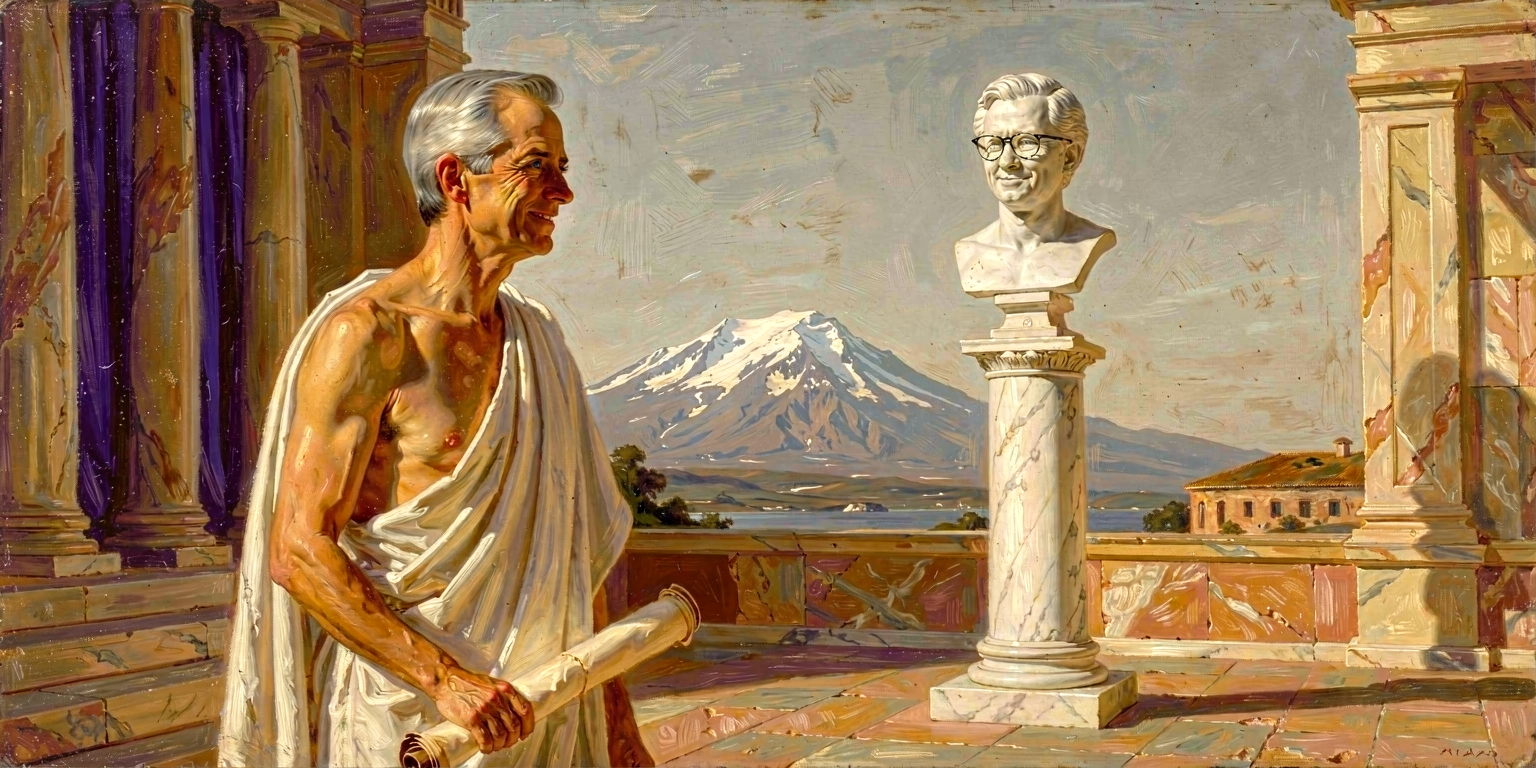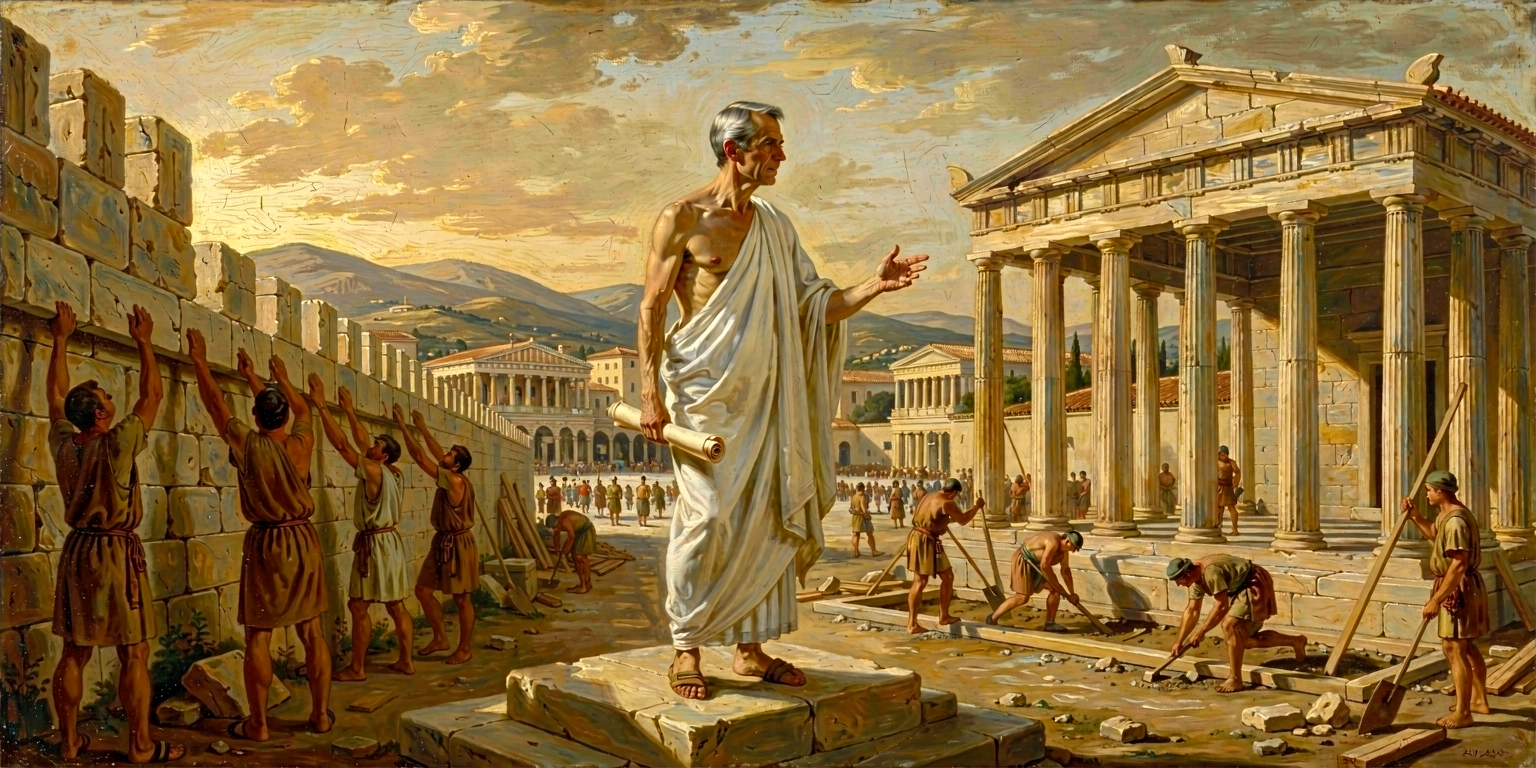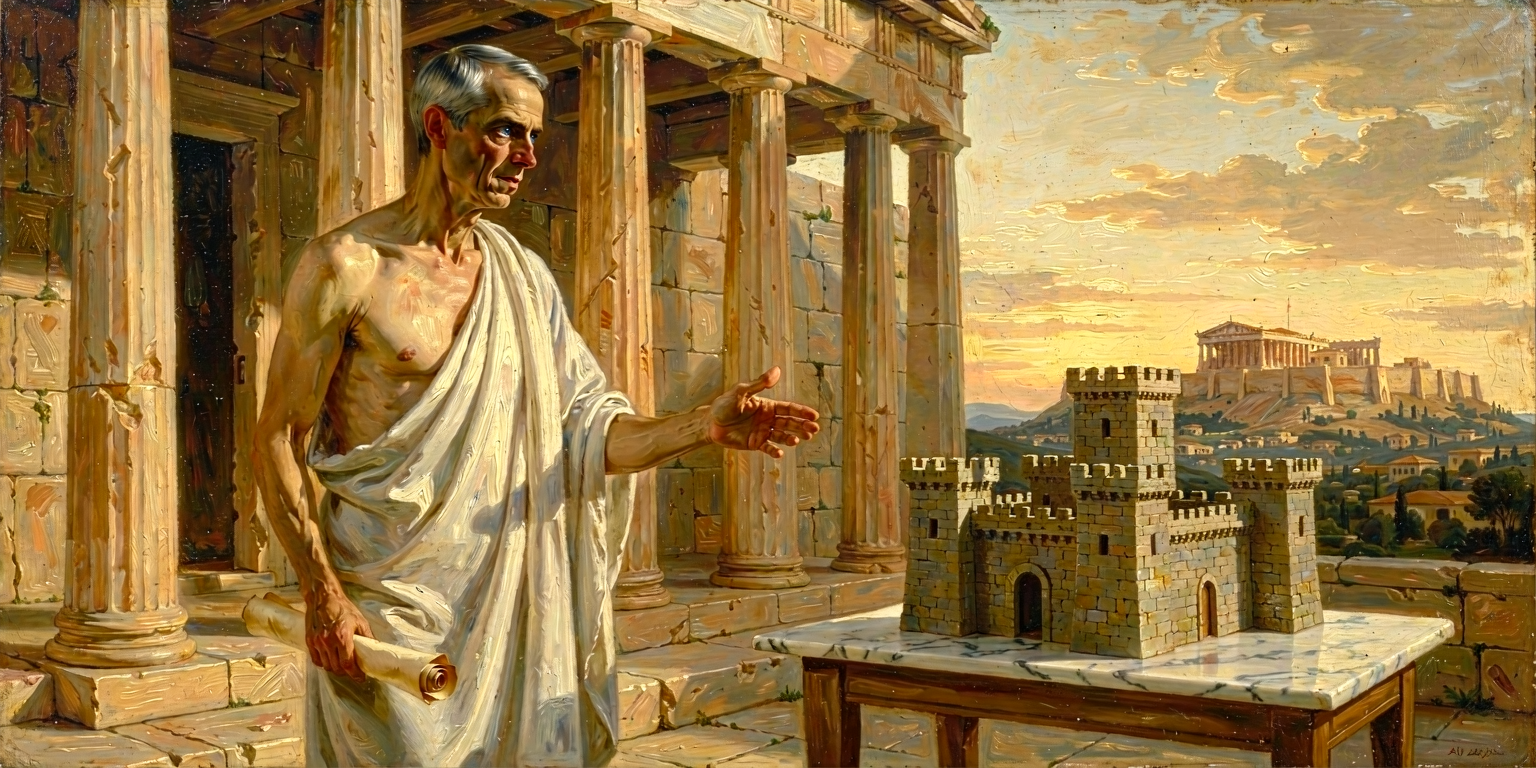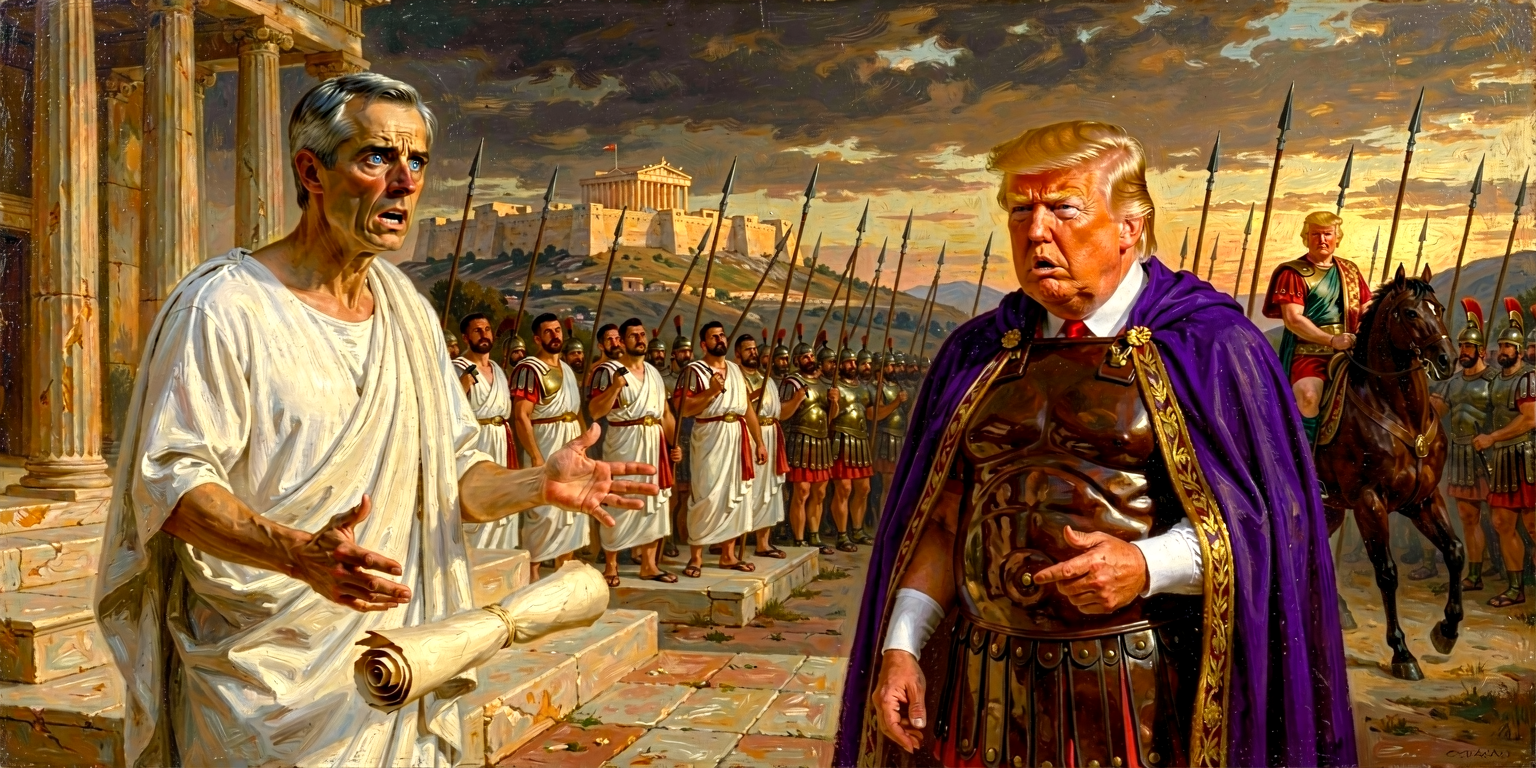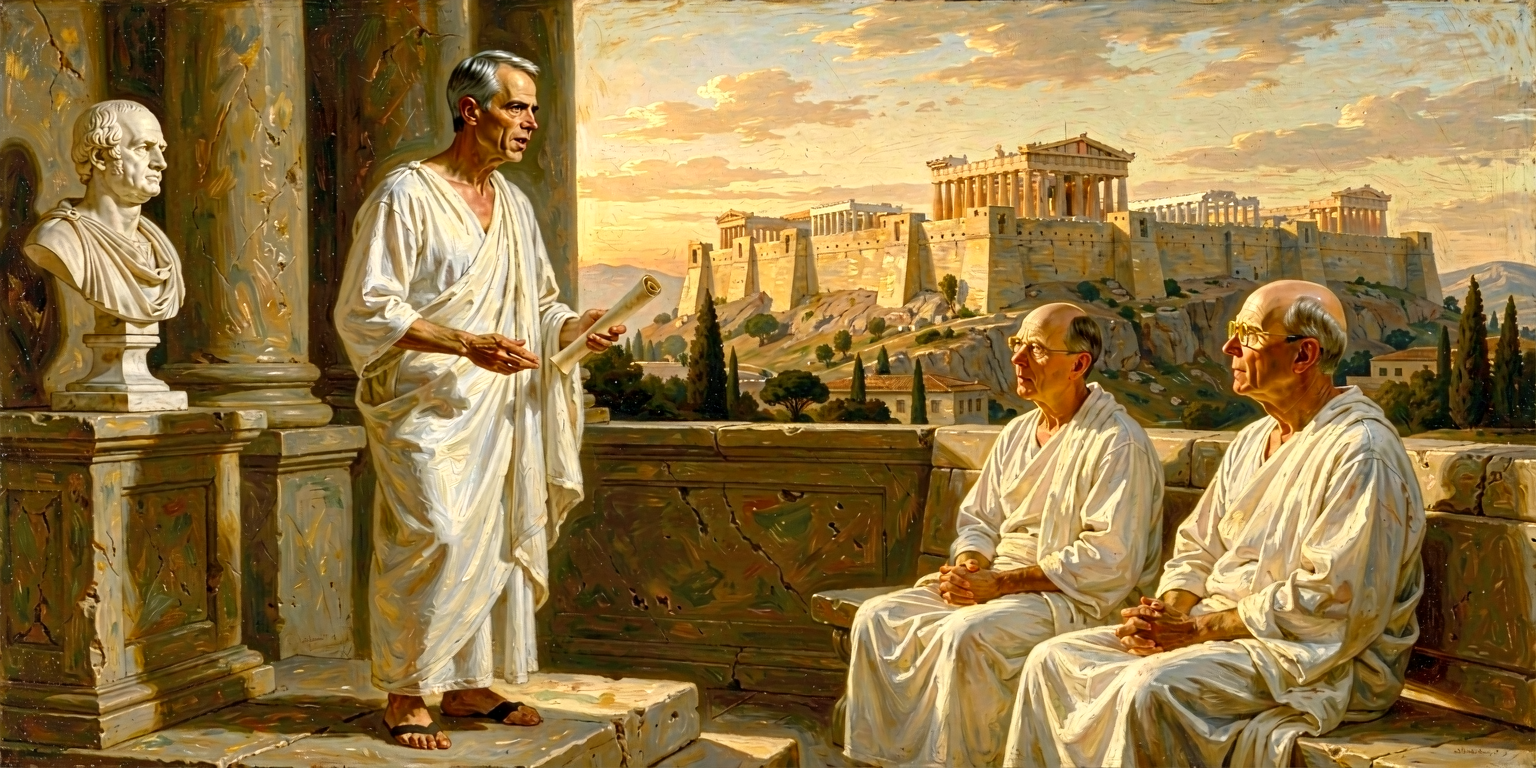
VIII. On Being Just and Wise at Once (§33–§36)

🇨🇦 Original

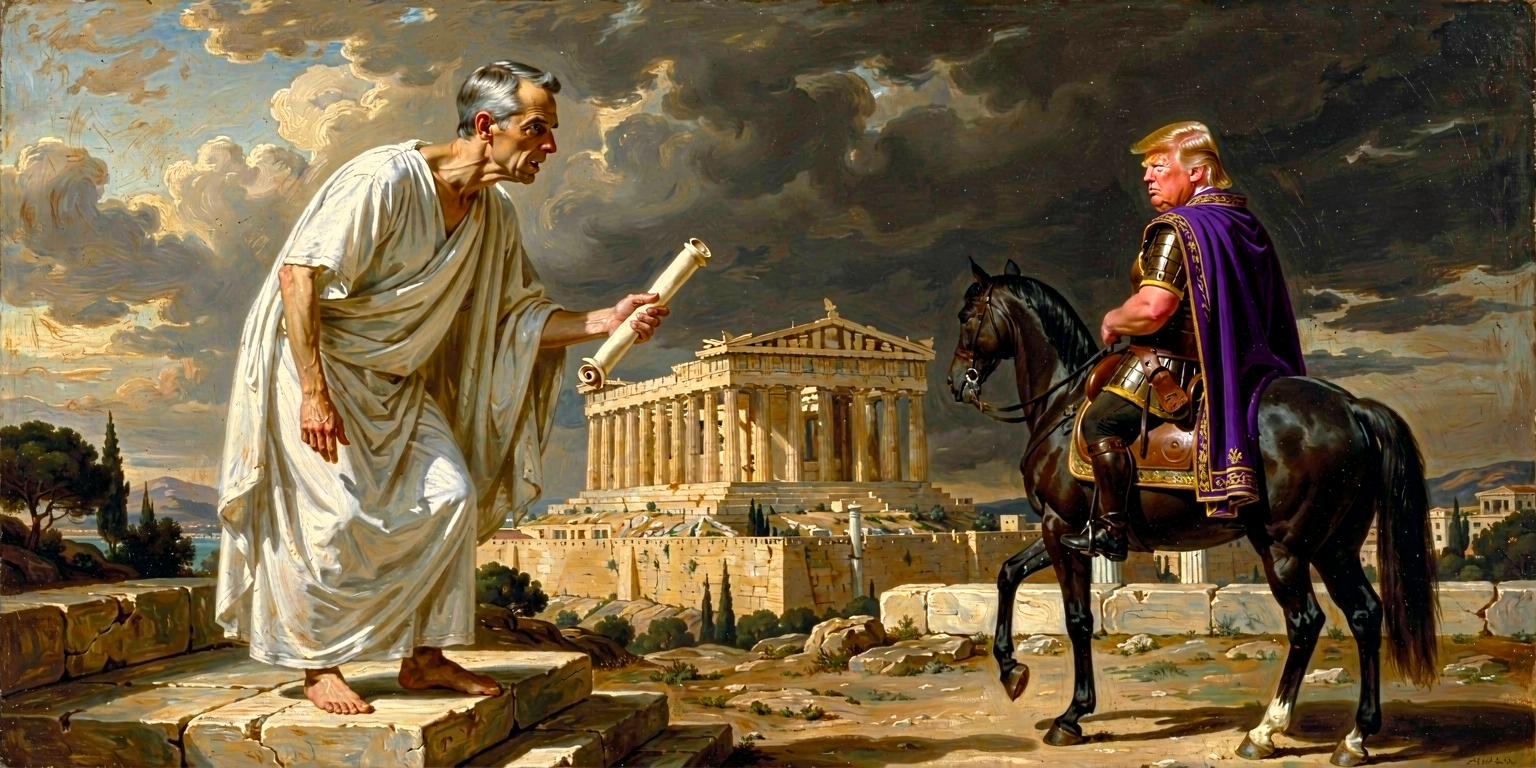
Now, Canada was amongst the first to hear the wake-up call, leading us to fundamentally shift our strategic posture.

Canadians know that our old, comfortable assumptions that our geography and alliance memberships automatically conferred prosperity and security – that assumption is no longer valid.

Our new approach rests on what Alexander Stubb, the President of Finland, has termed “value-based realism” – or, to put it another way, we aim to be both principled and pragmatic.

Principled in our commitment to fundamental values: sovereignty and territorial integrity, the prohibition of the use of force except when consistent with the UN Charter, and respect for human rights.

Pragmatic in recognising that progress is often incremental, that interests diverge, that not every partner will share all of our values.

🏛️ Translation

§33 πρώτη μέν που τῶν πόλεων ἡ Καναδία τῆς σάλπιγγος ταύτης ἀκούσασα, ἐκ βάθρων τὴν τοῦ πρὸς τὰ ἔξω πολιτεύεσθαι τάξιν μετεστήσατο.

Canada was among the first of states to hear this trumpet-call, and from the foundations she has remade the order of her dealings with those outside.

§34 οἱ μὲν γὰρ Καναδιεῖς γιγνώσκουσιν, ὦ οἱ συνελθόντες, ὅτι τὰ παλαιὰ ὑπολήμματα — ὡς ἥ τε τῆς γῆς θέσις καὶ τὸ τοῖς κρείττοσι συμμαχεῖν αὐτόματα τὴν τε εὐδαιμονίαν καὶ τὴν ἀσφάλειαν ἔφερεν — ταῦτα τὰ ὑπολήμματα οὐκέτι ἐστὶ κύρια.

For the Canadians know, O you here gathered, that those old assumptions — that the lay of our land and our partnership with stronger allies of themselves brought prosperity and security — these assumptions no longer hold force.

§35 ὁ δὲ ἡμέτερος καινὸς τρόπος ἐπί τινος ἐρείδεται, ὃ Ἀλέξανδρος ὁ Στοῦββος, ὁ τῆς Φιννίας πρόεδρος, ὠνόμασε «τὴν ἐπ’ ἤθεσι βεβηκυῖαν φρόνησιν».

Our new course rests upon a thing that Alexander Stubb, the leader of Finland, has named “the prudence grounded upon principles.”

§36 ἢ ἄλλως εἰπεῖν, ὦ οἱ συνελθόντες, βουλόμεθα ἅμα τε δίκαιοι εἶναι καὶ φρόνιμοι· δίκαιοι μὲν ἐν τῷ τῶν θεμελιωτάτων τιμωμένων ἀντέχεσθαι — λέγω δὴ αὐτονομίας, ἀκεραιότητος τῶν ὅρων, τοῦ μὴ βίᾳ χρῆσθαι πλὴν εἰ σύμφωνον ᾖ τοῖς τῶν ἡνωμένων ἐθνῶν νομίμοις, καὶ τοῦ τιμᾶν τὰ τῶν ἀνθρώπων δίκαια· φρόνιμοι δὲ ἐν τῷ συνορᾶν ὅτι τὰ πράγματα κατὰ μικρὸν πολλάκις προέρχεται, καὶ ὅτι τὰ συμφέροντα οὐ ταὐτὰ πᾶσιν, καὶ ὅτι οὐ πᾶς κοινωνὸς τὰ αὐτὰ ἡμῖν τιμᾷ.

Or to put it another way, O you here gathered, we wish to be at once just and wise: just in holding fast to the most fundamental of values — I mean sovereignty, the integrity of borders, the prohibition of using force except where it accords with the laws of the united nations, and the honoring of human rights; and wise in seeing together that things often advance only by little and little, that interests are not the same for all, and that not every partner honors the same things we do.

💬 Commentary

🤖 First pass

Introductory. This section is Demosthenically congenial — Carney shifts into the deliberative mode (συμβουλευτικός), making proposals rather than indicting. The classical antithesis between τὸ δίκαιον and τὸ συμφέρον — between the just and the expedient — is the central tension that Greek political theory worries about constantly, and Carney’s “principled and pragmatic” lands almost exactly on top of it.

Commentary.

  • The central antithesis in §36. Carney’s “principled and pragmatic” comes out as δίκαιοι καὶ φρόνιμοι. This isn’t a casual pairing — δίκαιον (the just) versus συμφέρον (the expedient) is one of the deepest fault lines in Greek political thought. The Athenian envoys in Thucydides’ Melian Dialogue argue that powerful states act on τὸ συμφέρον and abandon τὸ δίκαιον; the Melians try to invoke τὸ δίκαιον and are destroyed. Demosthenes spends his life trying to argue that for Athens, properly understood, the just is the expedient — that they coincide rather than conflict. So when Carney says “we aim to be both” and lays out two complementary lists of substance under each heading, he’s making essentially the Demosthenic move: refusing to choose, claiming the two can be held together by a careful state. The Greek receives this argument as a familiar friend.
  • φρόνιμος rather than πραγματικός. “Pragmatic” in English is a 19th-century coinage from πρᾶγμα; I rejected the modern Greek calque πραγματικός in favor of φρόνιμος (prudent, practically wise). φρόνησις is the Aristotelian virtue of practical wisdom — knowing how to act well in particular circumstances, given limited information and competing goods. That is exactly what Carney is describing when he glosses pragmatism as “recognizing that progress is often incremental, that interests diverge, that not every partner will share all of our values.” It’s not detached calculation; it’s φρόνησις in its technical sense.
  • The trumpet in §33. “Wake-up call” became τῆς σάλπιγγος ταύτης ἀκούσασα — “having heard this trumpet.” The σάλπιγξ summoned Greek hoplites to battle and to assembly; it’s the standard metaphor for urgent civic call-to-arms. Demosthenes habitually wishes Athens would respond to it, and his Philippics are essentially σάλπιγξ-blowing in oratorical form. So Carney’s “Canada was amongst the first to hear the wake-up call” becomes, in Greek, faintly self-congratulatory in a way the English doesn’t quite achieve — we heard what others have been slow to hear.
  • Value-based realism in §35 (first-pass form). This was the genuinely hard phrase. I refused to coin Greek for an abstract noun “realism” (modern Greek ρεαλισμός is a transliteration of Latin via French and would be barbarous here), and instead expanded it into a relative clause: τὴν τὰ ὄντα γιγνώσκουσαν ἅμα καὶ τοῖς ἤθεσι προσῳκειωμένην φρόνησιν — “the prudence which both knows things as they are and is held close to our character/principles.” Two participles modifying φρόνησιν do the work that the compound English adjective does. The cost is verbosity; the benefit is that the phrase is fully Greek, with no transliterated abstraction sitting in it like a foreign body. ἦθος (character, custom, ingrained disposition) carries something better than “value” — it implies what you are, not just what you affirm. (Compressed in the second pass under D22 — see below.)
  • The Stubb attribution (first-pass form). I had to commit to a transliteration: Ἀλέξανδρος ὁ Στούββος, τῆς Φιννίας πρόεδρος. (The article ὁ before the surname follows the foreigner-naming convention established at §10 with Βεγκέσλαος ὁ Ἁβέλος.) (Accent corrected in the second pass to Στοῦββος under D55 — see below.)
  • Finland. Finland gets Φιννία — a learned Hellenization on the Neo-Latin Finnia / Fennia (the form used in early modern European scholarly Latin from Olaus Magnus onward, and the route by which the country-name actually enters the post-classical Greek learned tradition: 18th-century antiquarian Phanariot1 Greek and the Ancient Greek Wikipedia both carry Φιννία on that pedigree). The Hellenization is parallel to Hispania → Ἱσπανία and Britannia → Βρεττανία — Latin country-name with -ία substituted for -ia. The classical-ethnonym route — Ptolemy’s Φίννοι (Geographia 3.5), Tacitus’ Fenni (Germania 46) — would in principle support the same Φιννία by the productive -ία suffix (Λυδοί → Λυδία, Φοίνικες → Φοινικία), but the route by which the form actually circulates in learned Greek is via the Neo-Latin scholarly tradition, not by direct ethnonym-coinage. Not the modern Greek form: contemporary Greek has Φινλανδία (transliterating Finland via the Germanic -land element), and Φιννία is specifically a learned / antiquarian alternative, not a modern one. There is no classical Greek word for Finland in the sense Carney’s English wants — the ancient world barely reached it — so any rendering is going to be a learned-historical intervention; the Φιννία form is the one that intervention has the cleanest pedigree to.

(Sign-off: “The next stretch is Carney’s enumeration of what Canada has actually done — tax cuts, removed interprovincial trade barriers, the trillion-dollar investments, doubled defense spending, the partnerships with the EU, twelve trade and security deals, partnerships with China and Qatar, negotiations with India and ASEAN, the variable-geometry coalitions on Ukraine and Greenland. That’s a long passage and turns concretely policy-listing — harder Greek terrain. Want me to push through, abbreviating the most catalogic parts?”)

🤖🧐 Second pass

D9Canada as Καναδία, a productive -ία coinage. First-pass and second-pass agree, but the second pass documents the rationale: Καναδία follows the classical -ία pattern for forming country names from ethnonyms or place-elements (Ἰταλία, Σικελία, Ἀρκαδία) and so reads as a Greek geographic noun rather than a transliterated proper name. The alternative — Κανάδα or Καναδᾶς as a 1:1 transliteration of the modern form — would have functioned but would have sounded like a Latin loanword sitting inside the Greek. The -ία coinage commits to making the country Greek-sounding throughout the speech.

D20 — ἐκ βάθρων emphatic. First-pass §33 had ἐξ αὐτῶν τῶν θεμελίων, “from the very foundations.” Second pass replaces with ἐκ βάθρων, “from the base-supports.” βάθρον is the stone plinth under a statue or column; ἐκ βάθρων μεταστήσασθαι is the Demosthenic idiom for political transformation that goes all the way down (compare On the Crown 18.296). The compression is two words for four, and the metaphor lands harder (a statue toppled from its plinth is more vivid than a building from its foundations).

D21 — τὸ τοῖς κρείττοσι συμμαχεῖν (not τὸ μετὰ τῶν κρειττόνων συμμάχων εἶναι). First-pass §34 had the periphrastic τὸ μετὰ τῶν κρειττόνων συμμάχων εἶναι, “to be with the stronger as allies.” Second-pass replaces with the single finite-verb construction τὸ τοῖς κρείττοσι συμμαχεῖν, “to be in alliance with the stronger.” συμμαχέω is the standard classical verb for being in a military alliance; the dative complement is exact. Five words become three; the rhetorical lift is a tighter parallel with τὰ παλαιὰ ὑπολήμματα (“the old assumptions”) at the head of §34.

D22 — Stubb’s “value-based realism” as ἐπ’ ἤθεσι βεβηκυῖα φρόνησις. First-pass §35 used the ten-word relative-clause expansion (preserved above in the first-pass commentary). Second-pass compresses to τὴν ἐπ’ ἤθεσι βεβηκυῖαν φρόνησιν, “the prudence standing upon principles” — four words rendering five English (“value-based realism”). The compression closes the “stands-upon” architectural triad: rules-based order = ἡ ἐπὶ τοῖς κανόσι βεβηκυῖα τάξις (§5, §15); sovereignty = ἡ ἐπὶ τοῖς κανόσι βεβηκυῖα αὐτονομία (§29, formerly νόμοις); value-based realism = ἡ ἐπ’ ἤθεσι βεβηκυῖα φρόνησις (§35). Three conceptual “stands-upon” patterns, all using the perfect-participle of βαίνω in the same syntactic frame, all conceptually load-bearing for the speech. The reader who hears the third instance hears the prior two beneath it. (Appendix II records this as the “stands-upon” pattern.)

D55 — Στούββος → Στοῦββος (accent correction). First-pass had Στούββος with acute on the diphthong ου; second-pass corrects to Στοῦββος with circumflex on the long penult. The properispomenon rule mandates the circumflex when the ultima is short (-ος, omicron) and the penult is long (the diphthong ου is always long). The first-pass error was a productive-rule failure on a novel coinage: the Hellenization of Stubb has no prior corpus presence the way Δημοσθένης or Ἕλληνες do, so the accent could not be pattern-matched from existing forms and had to be computed from the accent rules — which the first pass did not do. Pattern-matching on the cluster of -ούβος / -ούφος / -οῦδος shapes (none of them well-attested enough to settle the question either way) presumably produced the acute by default. Caught by Nick on a passive-reading sweep; the same correction propagates to every site Στούββος appears in the live rendering.

The form is the only instance in the rendering of a novel Hellenized surname whose accent had to be computed de novo rather than inherited from a standard learned form (Βεγκέσλαος via Latin Wenceslaus and Ἁβέλος via Latin Habel both come with the accent already settled by the Latin–Hellenist record). The case is significant beyond this rendering, and is taken up as a separately-named ontological weakness in Post D: AI command of Greek is to a real extent pattern-matched rather than rule-applied, and the gap is visible exactly at the novel-coinage edge where pattern-matching has nothing to grip on.

D23 — κοινωνός broader-than-σύμμαχος. §36 closes by qualifying that “not every partner honors the same things we do.” First-pass had οὐ πᾶς ὅστις σύμμαχος γίγνεται, “not everyone who becomes an ally.” Second-pass replaces with οὐ πᾶς κοινωνός, “not every partner.” σύμμαχος is the military-treaty ally specifically (NATO, the Coalition of the Willing); κοινωνός is the broader partner in any common undertaking — trade, security, investment, culture. Carney’s “partner” in this paragraph is the broader one (he’s about to discuss broad engagement with India, ASEAN, etc., where the relationship isn’t military). κοινωνός is the right word; σύμμαχος is reserved for the military-alliance sections (§28, §45, §53). The κοινωνός keyword extends into §65 (“we are partners steady and trustworthy”) — see Post XV.

D8 — quotidian kernel at §34, §36. As elsewhere in the body of the speech, the first-pass ὦ ἄνδρες becomes ὦ οἱ συνελθόντες.


Footnotes


  1. The Phanariots were the Greek Orthodox elite of the Phanar district of Constantinople under Ottoman rule — primarily 18th- and 19th-century — who served as Ottoman diplomats, prince-governors of the Danubian principalities (Wallachia and Moldavia), and patrons of Greek learning across the Ottoman lands. Phanariot Greek in the philological sense names the learned, antiquarian variety of Greek they wrote and read: heavily classicizing, drawing on Attic and Koine models against the spoken vernacular, and standing as the principal channel by which Neo-Latin scholarly forms (like Finnia → Φιννία) entered the Greek learned tradition rather than passing through the spoken language. It is the closest ancestor of Katharevousa, the formal-classicizing register that dominated Greek public writing into the 20th century.↩︎

VII. On Sovereignty as Insurance (§29–§32)

🇨🇦 Original

They’ll buy insurance, increase options, in order to rebuild sovereignty – sovereignty that was once grounded in rules, but will increasingly be anchored in the ability to withstand pressure.

This room knows this is classic risk management. Risk management comes at a price, but that cost of strategic autonomy, of sovereignty, can also be shared. Collective investments in resilience are cheaper than everyone building their own fortresses. Shared standards reduce fragmentation. Complementarities are positive sum.

The question for middle powers, like Canada, is not whether to adapt to this new reality. We must. The question is whether we adapt by simply building higher walls – or whether we can do something more ambitious.

🏛️ Translation

§29 ὠνήσονται μὲν τὴν ἐγγύην, πλείους δὲ ἑαυτοῖς τὰς αἱρέσεις παρασκευάσονται, ὥστε τὴν αὐτονομίαν ἀνακτᾶσθαι — λέγω δὲ αὐτονομίαν τὴν πάλαι μὲν ἐπὶ τοῖς κανόσι βεβηκυῖαν, νυνὶ δὲ μᾶλλον ἐν τῷ ταῖς ἀνάγκαις ἀντέχειν τὴν ἄγκυραν ἔχουσαν.

They will buy surety, and they will furnish themselves with a greater range of choices, so as to recover their sovereignty — and by sovereignty I mean what once stood firm upon the rules, but will now have its anchor cast rather in the power to hold out against compulsion.

§30 ἴστε δήπου πάντες, ὦ οἱ παρόντες, ὅτι παλαιά τις τέχνη ἐστὶν αὕτη — λέγω δὴ τὸ τοὺς ἐπιφερομένους κινδύνους προμηθεῖσθαι. καὶ δαπάνης μέντοι δεῖται ἡ τέχνη αὕτη· ἔξεστι δ’ ἡμῖν τὸ τῆς αὐτονομίας ταύτης ἀνάλωμα κοινῇ διαφέρειν.

You know surely, all of you here present, that this is an old craft — I mean, the taking of forethought against dangers coming upon us. And this craft requires expense; but the cost of that sovereignty it is open to us to bear in common.

§31 αἱ μὲν γὰρ κοιναὶ εἰς τὸ ἀντισχεῖν δαπάναι ἐλάττονος ἀναλώματος δέονται ἢ εἰ ἕκαστος ἰδίᾳ τὰ ἑαυτοῦ τείχη οἰκοδομοίη· οἱ δὲ κοινοὶ ὅροι τὰς διασπάσεις παύουσιν· τὰ δὲ συναρμοζόμενα αὐξάνει τὸ κοινὸν ὄφελος.

For common expenditures upon the power of holding out require less outlay than if every man, each in private, built his own walls. Shared boundary-marks put a stop to the rending-apart. And things fitted to one another increase the common benefit.

§32 τὸ μὲν οὖν ἐρώτημα ταῖς μέσην δύναμιν ἐχούσαις, ὦ οἱ συνελθόντες, οὐχ οὕτως ἔχει εἰ χρὴ τοῖς καινοῖς πράγμασι ἁρμόσασθαι — δεῖ γάρ· τὸ δὲ ἐρώτημα τοῦτό ἐστι, πότερον ἁπλῶς τὰ τείχη ὑψηλότερα ποιήσομεν, ἢ φιλοτιμότερόν τι καὶ μεῖζον ἐπιχειρήσομεν.

The question, then, for those with middling power, O you here gathered, is not whether we must accommodate ourselves to these new circumstances — we must. The question is this: shall we merely raise our walls a little higher, or shall we attempt something with more ambition in it, something greater?

💬 Commentary

🤖 First pass

Commentary (continued from Post VI).

  • The Demosthenic gift in §30. Carney says “this room knows this is classic risk management.” When you render “risk management” as τὸ τοὺς ἐπιφερομένους κινδύνους προμηθεῖσθαι — “taking forethought of dangers coming upon us” — something subterranean happens. προμηθεία (forethought) and προμηθεῖσθαι are exactly the words Demosthenes uses over and over in the Olynthiacs and Philippics to scold the Athenians for failing to do what they ought. His standing complaint is that Athens won’t προμηθεῖσθαι about Philip; she keeps waiting until disaster arrives. So “classic risk management” in Demosthenic Greek isn’t just an accurate translation — it’s the Demosthenic refrain itself, the very thing he wishes the assembly would learn. Carney’s banker-speak and Demosthenes’ political moralism land on the same word. That’s a windfall.
  • The anchor in §29. ἐν τῷ ταῖς ἀνάγκαις ἀντέχειν τὴν ἄγκυραν ἔχουσαν — “having her anchor cast in the holding-out against compulsion.” Carney says “anchored in the ability to withstand pressure” as a half-dead metaphor; in English we say “anchored” all the time without seeing the ship. Greek won’t let the anchor stay dead — ἄγκυρα is a physical object, hung over the side, hooking into the sea floor. Putting sovereignty’s anchor in the act of ἀντέχειν (literally “holding against”) makes the picture vivid in a way the English source allows but doesn’t insist on.

(Sign-off: “The next stretch is Carney’s pivot to ‘the question for middle powers like Canada is not whether to adapt to the new reality — we must. The question is whether…’ and then his enumeration of what Canada has actually done. The argumentative mode gets more programmatic and the speech takes on what Demosthenes would recognize as συμβουλευτικός register — deliberative rather than indictive. Shall I continue?”)

🤖🧐 Second pass

D18 — ἐγγύη (not ἀσφάλεια) for “insurance” in §29. First-pass: ὠνήσονται μὲν τὴν ἀσφάλειαν, “they will buy safety.” Second-pass replaces with ὠνήσονται μὲν τὴν ἐγγύην, “they will buy surety.” ἐγγύη is the precise Athenian legal-financial term for a personal pledge or guarantee — what a guarantor (ὁ ἐγγυητής) offered to make a contract binding. The legal-financial register is right for what Carney calls “insurance”; ἀσφάλεια was too broad and lost the financial-instrument flavour. The first-pass ὠνήσονται-construction (which preserves the ring with §7/§8) is retained intact. English back-translation is “surety” consistently across §29 and any later commentary echo, not “insurance” / “pledge” / “guarantee” — the gloss-set was being used inconsistently; “surety” is the canonical English landing.

D13 — extended into §29. The “stands upon rules” keyword set (κανόσι not νόμοις) extends from §15 into §29: ἐπὶ τοῖς κανόσι βεβηκυῖαν was the first-pass reading at §15, νόμοις at §29; second pass aligns §29 with §15. The phrase becomes a refrain: the “old sovereignty” (αὐτονομία) is described in identical terms each time it is named (§5, §15, §29, §57, §59), so that the reader hears the same structural figure recur and grasp it as a single thing being argued about throughout.

D8§30 keeps ὦ οἱ παρόντες (the “you here present” beat). Unlike §15, §19, §20, §24, §32 — where the bare ὦ ἄνδρες becomes the quotidian kernel ὦ οἱ συνελθόντες — §30 keeps the first-pass form ὦ οἱ παρόντες, “O you here present.” This is the canonical Demosthenic sub-address used in the run of any speech for a turn toward the present audience; in §30 it functions as a deictic (“you all know this is classic risk management”), and the Demosthenic ear receives it as a familiar gear-shift toward the immediate room. The second-pass D8 policy explicitly preserves this local choice, as it preserves ὦ φίλοι at §14.

D19 — considered, not adopted. §31 was considered for a tightening of ἐλάττονος ἀναλώματος δέονται (“require less outlay”) into ἐλάττους εἰσίν (“are smaller”). The condensation was rejected on register grounds: the first-pass fiscal precision (the genitive of price / the technical-treasury vocabulary of ἀνάλωμα) was judged to be doing more rhetorical work than would be saved by the shorter form. Demosthenes’ deliberative speeches favour precise treasury vocabulary when arguing about expenditure; brevity for its own sake would have been a register loss. The §31 reading therefore stands as the first pass had it.

D8§32 quotidian kernel. ὦ ἄνδρες → ὦ οἱ συνελθόντες, per the global policy.


VI. Against the Doctrine of Fortresses (§24–§28)

🇨🇦 Original

But let us be clear-eyed about where this leads. A world of fortresses will be poorer, more fragile, and less sustainable.

And there is another truth. If great powers abandon even the pretence of rules and values for the unhindered pursuit of their power and interests, the gains from transactionalism will become harder to replicate. Hegemons cannot continually monetise their relationships.

Allies will diversify to hedge against uncertainty.

🏛️ Translation

§24 ἀλλὰ σαφῶς ἴδωμεν, ὦ οἱ συνελθόντες, ποῖ τείνει ταῦτα.

But let us see clearly, O you here gathered, where these things tend.

§25 κόσμος μὲν γὰρ εἰς πύργους καὶ τείχη διῃρημένος πενιχρότερός τε ἔσται καὶ σαθρώτερος καὶ πρὸς τὸ διηνεκὲς ἀσθενέστερος.

For a world divided up into towers and walls will be poorer, more brittle, and weaker for the long term.

§26 καὶ μὴν ἄλλο τι λέξω ὑμῖν ἀληθές. ἐὰν οἱ μέγιστον δυνάμενοι μηδ’ αὐτὸ τὸ σχῆμα τῶν νόμων καὶ τῶν τιμωμένων ἔτι σώζωσιν, ἀλλ’ ἀκωλύτως τὴν ἑαυτῶν δύναμιν καὶ τὰ συμφέροντα διώκωσιν, οὐκέτι ῥᾳδίως αὖθις τὰ ὅμοια ἐκ τῶν συναλλαγμάτων κέρδη ἀναλήψονται.

And further I shall tell you another truth. If those of greatest power no longer preserve even the outward form of laws and values, but pursue their own might and their interests without hindrance, they will not again easily recover from their dealings the same gains as before.

§27 οὐ γὰρ οἷόν τέ ἐστιν τοὺς ἡγεμόνας τὰς πρὸς ἀλλήλους κοινωνίας ἀεὶ χρηματίζεσθαι.

For it is not possible for hegemons to keep on making money out of their relations with others.

§28 οἱ δὲ σύμμαχοι, ὡς ἂν τὸ ἄδηλον τοῦ μέλλοντος προφυλάξωνται, εἰς πλείους πόλεις κοινωνίας ἑαυτοῖς πορίσονται.

Allies, so as to guard themselves against the uncertainty of what is to come, will procure for themselves partnerships with more states than one.

💬 Commentary

🤖 First pass

Introductory. This section gives Greek one of its happiest moments: Carney’s “classic risk management” turns out to map onto the very thing Demosthenes spent his career nagging Athens about — προμηθεῖσθαι, “taking forethought against what is coming.” The deep history quietly cooperates with the surface translation. (The προμηθεῖσθαι windfall itself lands in §30, in Post VII — but the build-up to it is the work of §24§28.)

Commentary.

  • The fortress in §25. πύργοι (towers) and τείχη (walls) for “fortresses” — both are exactly the words Demosthenes uses when arguing about the defense of states against Philip. He spends real time on the question whether Athenian energy should go behind the walls or out into the field; the contrast Carney draws between a “world of fortresses” and one of cooperation would have been intuitively legible to the original audience, possibly more legible to them than to us. A fortressed κόσμος, “world,” was a real historical question, not an abstraction.
  • χρηματίζεσθαι in §27. This was the most satisfying single verb in the section. χρηματίζομαι in the middle means literally “to make money for oneself, to do business for one’s own profit.” Demosthenes uses it pejoratively for corrupt politicians who turn public position into private wealth. So “hegemons cannot continually monetize their relationships” becomes οὐχ οἷόν τε τοὺς ἡγεμόνας τὰς κοινωνίας ἀεὶ χρηματίζεσθαι — which carries Carney’s economic sense exactly, while also picking up an editorial tone he doesn’t quite state but plainly intends. The Greek will not let you say it innocently.
  • The ring composition with ὠνέομαι (forward link). In §7 (Post II) I had “hope that compliance will purchase safety” — ἡ εὐπείθεια τὴν σωτηρίαν ὠνήσεται. In §8: ἀλλ’ οὐκ ὠνήσεται, “but it will not.” The same verb returns in §29 (Post VII) for diversifying allies: ὠνήσονται μὲν τὴν ἐγγύην, “they will buy surety” — but this time for those who diversify rather than comply. The Greek thread (compliance won’t buy safety, but distributed sovereignty will) is tighter and more visible than in Carney’s English, where the lexical repetition is dimmer. This is one of the small advantages of doing this in a language with stronger verbal aspect.

🤖🧐 Second pass

D8 — quotidian kernel at §24. First-pass ὦ ἄνδρες → ὦ οἱ συνελθόντες, per the global policy. §25§28 in the first pass carried no vocative slot to update, and the second-pass log marks them [carried] — unchanged from first pass.

D50 — πρὸς τὸ διηνεκές back-translation standardized to “for the long term”. First-pass §25 closed with πρὸς τὸ διηνεκὲς ἀσθενέστερος, back-translated as “weaker for the long enduring” — a gerund-like calque that does not read as English. Second-pass leaves the Greek untouched (πρὸς τὸ διηνεκές is the classical substantivized neuter, “for the long run / for perpetuity,” attested in both πρὸς + acc. and εἰς + acc. forms) and refines the English to “weaker for the long term,” which maps the temporal-projection sense exactly and matches Carney’s own “less sustainable” at this slot. The same Greek expression recurs at §65 (κοινωνοὶ οἷοι… τιμᾶν πρὸς τὸ διηνεκές), where the first-pass had rendered it as “looking to the long stretch ahead” — also standardized to “for the long term” so the recurrence is audible to the reader. Greek-side this is purely a back-translation refinement; no Greek change at either site.

σχῆμα / ἔργῳ first surfaces here, at §26. The keyword pair that will land its climactic deployment at §55 (σχῆμα μέν ἐστι τῆς αὐτονομίας, ἔργῳ δὲ ὑποτέλεια, “in outward form it is sovereignty, but in deed it is vassalage” — see Post XIII) makes its first quiet appearance at §26: αὐτὸ τὸ σχῆμα τῶν νόμων καὶ τῶν τιμωμένων, “the outward form of the laws and of the values.” Carney’s “even the pretence of rules and values” hands the Greek the σχῆμα keyword on a plate, and the second-pass apparatus (Appendix II) records this as the inaugural instance of one of the speech’s load-bearing rhetorical pairs.

No other second-pass changes in this batch. Appendix I marks §25§28 as carried unchanged from the first pass. The first-pass commentary above is therefore the published commentary for these sections.


V. On Bonds Forged into Weapons (§20–§23)

🇨🇦 Original

Over the past two decades, a series of crises in finance, health, energy, and geopolitics have laid bare the risks of extreme global integration.

More recently, great powers have begun using economic integration as weapons, tariffs as leverage, financial infrastructure as coercion, and supply chains as vulnerabilities to be exploited.

You cannot “live within the lie” of mutual benefit through integration when integration becomes the source of your subordination.

The multilateral institutions on which the middle powers have relied – the WTO, the UN, the COP – the architecture, the very architecture of collective problem solving – are under threat.

As a result, many countries are drawing the same conclusions. They must develop greater strategic autonomy: in energy, food, critical minerals, in finance, and supply chains.

This impulse is understandable. A country that cannot feed itself, fuel itself, or defend itself has few options. When the rules no longer protect you, you must protect yourself.

🏛️ Translation

§20 ἐν δὲ τοῖς ἔγγιστα εἴκοσιν ἔτεσι, ὦ οἱ συνελθόντες, πολλοὶ καὶ ἀλλεπάλληλοι κίνδυνοι — οἱ μὲν περὶ τὰ χρήματα, οἱ δὲ περὶ τὴν ὑγίειαν, οἱ δὲ περὶ τοὺς τῶν καυσίμων πόρους, οἱ δὲ περὶ τὰ τῶν πόλεων πρὸς ἀλλήλας πράγματα — ἐγύμνωσαν ὅσοι κίνδυνοι ἔνεισιν τῇ ἄγαν τῆς οἰκουμένης συνδέσει. ἔτι δὲ μᾶλλον νυνὶ οἱ μέγιστον δυνάμενοι τὴν μὲν τῶν χρημάτων κοινωνίαν ὥσπερ ὅπλα μετεχειρίσαντο, τὰ δὲ τέλη ὥσπερ μοχλούς, τὴν δὲ τῶν τραπεζῶν διοίκησιν ὡς ζυγόν, τὰς δὲ τῶν ἐπιτηδείων ὁδοὺς ὡς ἀσθενείας ὑποχειρίους.

Within these last twenty years, O you here gathered, many crises one upon the other — some concerning money, some concerning health, some concerning fuel-resources, some concerning the affairs of states one with another — have laid bare how many dangers lie within an excessive binding-together of the inhabited world. And still more recently, those of greatest power have taken up the integration of money as a weapon, tariffs as a lever, the management of banks as a yoke, and the routes by which necessaries travel as weaknesses ready to hand for the seizing.

§21 οὐκ ἔνεστι δὴ ἐν τῷ ψεύδει τούτῳ διαζῆν — λέγω δὴ τῷ φάναι ἀμφοτέρους ἐκ τῆς κοινωνίας ὠφελεῖσθαι — ὅταν αὕτη ἡ κοινωνία ἡμᾶς ὑπηκόους καθιστῇ.

One cannot, indeed, live within this lie — I mean the lie of saying that both sides gain from being bound together — whenever that very bond makes us subjects.

§22 αὐτὴ δὴ ἡ τοῦ κοινῇ τὰ πράγματα διοικεῖν κατασκευή, ᾗ ἐπίστευον αἱ μέσην δύναμιν ἔχουσαι πόλεις — λέγω δὴ τήν τε περὶ τῆς ἐμπορίας σύνοδον, καὶ τὸ τῶν ἡνωμένων ἐθνῶν συνέδριον, καὶ τὰς περὶ τῆς αἰθρίας διαφυλακῆς διαλέξεις — αὕτη νυνὶ κινδυνεύει. ὅθεν πολλαὶ τῶν πόλεων εἰς τὸ αὐτὸ ἥκουσι γνώμης· δεῖν αὑτὰς ἑαυταῖς ἐπαρκεῖν, ἔν τε τοῖς τῶν καυσίμων πόροις καὶ τῷ σίτῳ καὶ τοῖς ἀναγκαιοτάτοις τῶν ἐκ γῆς μεταλλευομένων καὶ ταῖς τῶν χρημάτων διοικήσεσι καὶ ταῖς τῶν ἐπιτηδείων κομιδαῖς.

That very framework for the managing of affairs in common, which the states of middling power trusted — I mean the council upon commerce, and the assembly of the united nations, and the deliberations on the safeguarding of fair weather — this same framework now stands in danger. Whence many states come to one and the same opinion: that they must provide for themselves, in fuel-resources, and in grain, and in the most essential of things mined from the earth, and in the management of money, and in the conveyance of necessaries.

§23 καὶ μὴν ὀρθῶς γε ταῦτα φαίνεται διανοεῖσθαι. πόλις γὰρ ἥτις μήτε τρέφειν ἑαυτὴν δύναται, μήτε θερμαίνειν, μήτε ἀμύνειν, ὀλίγα ἂν αὐτῇ πράττειν λείπεται. ὅταν δὲ μηκέτι οἱ κανόνες σε σῴζωσιν, ἀνάγκη σαυτὸν αὐτὸν σῴζειν.

And indeed they appear to think this rightly. For a state which can neither feed itself, nor keep itself warm, nor ward off attack — few things are left for it to do. And whenever the rules no longer save you, of necessity you must save yourself.

💬 Commentary

🤖 First pass

Introductory. This stretch was the most interesting yet, because Carney’s metaphors (integration as weapon, tariffs as leverage, supply chains as vulnerabilities) hand the Greek a four-fold parallel construction it loves, and because the names of modern institutions force genuine choices about how to make their function legible in classical terms.

Commentary. Three notes worth pointing at:

  • The four-fold weaponization in §20. Carney gives me a clean four-part parallel — integration / tariffs / financial infrastructure / supply chains as weapons / lever / coercion / vulnerabilities — and Greek with its strong μέν… δέ… δέ… δέ rhythm welcomes that structure. The happy coincidence: τέλη is the exact Attic word for customs duties (Demosthenes uses it constantly when complaining about Athenian tax-farmers), and μοχλός is the literal lever for shifting building-stones. The metaphor doesn’t need to be naturalized — both languages share it. Likewise τὰ ἐπιτήδεια (“necessaries, provisions”) is already the standard military-logistics word from Xenophon onward, so “supply chains” becomes αἱ τῶν ἐπιτηδείων ὁδοί (“the routes by which necessaries travel”) with no torsion at all.

  • The institutions in §22. The most interpretive move in the whole speech so far. I refused transliteration — Δαβλιουτιοῦ for WTO would be barbarous.

    A second option I should name explicitly because I did not consider it, since the option would not have occurred to a classical translator: the Modern Greek initialism. Modern Greek handles institutional names with letter-acronyms — ΠΟΕ for the World Trade Organisation (Παγκόσμιος Οργανισμός Εμπορίου), ΔΝΤ for the International Monetary Fund (Διεθνές Νομισματικό Ταμείο), ΟΗΕ for the United Nations (Οργανισμός Ηνωμένων Εθνών) — often sounded out as if proper words: Πόε, Δουνουτού, Οηέ. The strategy is so widespread in contemporary Greek that any translator working from a modern-Greek instinct would arrive at it without thinking. But classical Greek has no such device. Initialism as a name-forming strategy is post-medieval, an artefact of bureaucratic and commercial writing; classical Greek used its letters to enumerate (α, β, γ for first, second, third) and once a name was introduced one could refer to it by a single letter as a label, but never to compress a multi-word institutional name into a pronounceable acronym. Demosthenes naming the Delian League says ἡ τῶν συμμάχων ἀρχή, not “ΣΑ.” Aristotle naming the Athenian constitution says ἡ Ἀθηναίων πολιτεία, not “ΑΠ.” The whole class of acronymic options was unavailable to the speech’s register, not declined: it sits on the wrong side of a two-thousand-year fault line in how Greek prose names things. Which left only periphrasis as a live option — periphrasis built around each body’s function:

    • WTO becomes ἡ περὶ τῆς ἐμπορίας σύνοδος, “the council on commerce.”
    • UN becomes τὸ τῶν ἡνωμένων ἐθνῶν συνέδριον, “the assembly of united nations.” This one is a near-pure calque that happens to be idiomatic — συνέδριον was the actual word for federal councils like the Hellenic League’s.
    • COPs become αἱ περὶ τοῦ τῆς γῆς ἀέρος διαλέξεις, “the deliberations upon the air of the earth.” This is the loosest of the three, because there’s no ancient word for “climate” in our atmospheric-system sense — ἀήρ is what one breathes, but combined with τῆς γῆς it points correctly at the surrounding envelope.

    The risk with these renderings is that they sound a touch antiquarian-quaint, like translating “the Federal Reserve” as “the bronze-clad treasury.” But the alternative — a heap of transliterations — would shred the Demosthenic register entirely. I think the trade is worth it.

  • The gnomic1 clinch in §23. The closing sentence — ὅταν δὲ μηκέτι οἱ κανόνες σε σῴζωσιν, ἀνάγκη σαυτὸν αὐτὸν σῴζειν, “when the rules no longer save you, you must yourself save yourself” — leans on a verbal echo (σῴζωσιν… σῴζειν) that Demosthenes deploys constantly in his sententiae. The verb σῴζω has a wider field than English “save”: it means to keep safe, to preserve, to bring through. The σε of the first clause (you-as-object) and the σαυτόν of the second (you-as-object-of-self) trace the whole transition the argument is describing — from being saved-by-another to being saved-by-self. It’s one of those rare moments where the Greek lands the rhetorical point harder than the English does, because the case-marking does the work that English needs an extra clause to do. (First pass had οἱ νόμοι here; second-pass D49 raises the keyword to οἱ κανόνες so the gnomic close picks up the rules-based-order indictment that §15/§22 have just been mounting, rather than reading as a generic legal-aphoristic sententia. See below.)

(Sign-off: “The next stretch — ‘But let’s be clear-eyed about where this leads…’ through ‘risk management comes at a price’ — gives me a chance to do something with the fortress metaphor, which Demosthenes would handle with relish (πύργοι, ἔρυμα, τὰ τείχη). Shall I press on?”)

🤖🧐 Second pass

D5 — “energy” as οἱ τῶν καυσίμων πόροι. First-pass §20 and §22 had τοὺς τοῦ πυρὸς πόρους / ἔν τε τοῖς τοῦ πυρὸς πόροις, “the resources of fire” — a metonymy intelligible as the pre-industrial experience of fuel-into-heat, but strained against the hydroelectric and nuclear components of the modern referent. Second pass replaces with τοὺς τῶν καυσίμων πόρους / ἔν τε τοῖς τῶν καυσίμων πόροις, “fuel-resources.” πόρος is retained deliberately — it is Xenophon’s word for state resource and revenue, the title-word of the Poroi, and it keeps the term in the register of economic statecraft the speech requires. καύσιμος supplies the transparent “combustible.”

I should be candid about what prejudiced me against this rendering initially. Καύσιμο is the standard Modern Greek word for fuel: petrol stations advertise καύσιμα; the noun is in every Athens taxi receipt and every garage sign. When a classical translator reaches for a word that the modern language uses in the very sense they need, the first instinct is suspicion — am I smuggling a Demotic word back into Attic in fake-classical guise, on the strength of an etymology that any modern speaker could have arrived at on their own? The Modern Greek fluency of the form felt like a sign that the form was too easy, that the apparent classical pedigree was a confection.

The check that turned the prejudice around was straightforward: καύσιμος and καύσιμος ὕλη are in fact attested in TheophrastusHistoria Plantarum 5.9 on combustible woods, and the surviving fragments of Περὶ πυρός on the physics of combustion. Theophrastus is Demosthenes’ own near-contemporary (slightly junior) and the founder of Lyceum scientific vocabulary; the word lives in the same generation as the oratorical Greek the speech is written in. The Modern Greek persistence is therefore not a Demotic coinage being snuck back; it is a genuine continuity of the classical-technical word across two and a half millennia. That continuity, once verified, became a reason to use the word rather than an objection to it: it carries an unbroken thread from Theophrastus to the petrol station, and the speech is in a position to honour both ends of that thread at once. The Modern Greek echo, once a strike against, became a quiet endorsement.

The cost remains a hairline register-seam: καύσιμος belongs to the technical prose of the Lyceum, not the oratorical Greek of the assembly. The seam falls between oratorical and technical Greek of a single generation, not between antiquity and modernity — the same register-seam licensed at D28 for ἔλλογα ὄργανα (AI as a technical loan from Aristotle and Theophrastus, see Post IX). (The residual limitation, that “combustibles” does not formally cover non-combustion energy, is accepted on the same principle as the other periphrases: name the handle the ancient world possessed, let context carry the extension. §41 follows the same strict uniform form; §64 takes the local εὐπορία-swell for the “superpower” position — see Post XV.)

D15 — banking as ζυγός (not ἀνάγκη). First-pass §20 had τὴν δὲ τῶν τραπεζῶν διοίκησιν ὡς εἰς ἀνάγκην ἄγουσαν, “the management of banks as bringing-into-compulsion.” Second pass replaces with τὴν δὲ τῶν τραπεζῶν διοίκησιν ὡς ζυγόν, “the management of banks as a yoke.” ζυγός is the wooden yoke laid across the necks of draught animals — physical, visible, weighted. The shift trades an abstract participial phrase for a single bare noun, and makes the fourth limb of the four-fold parallel structurally symmetrical with τὰ τέλη ὥσπερ μοχλούς (“tariffs as a lever”) — both single bare-noun metaphors of compulsion-by-physical-instrument.

The workshop floated several candidates for the concrete coercion-image, and ζυγός was not the one with the strongest Demosthenic statistics. The alternatives raised, with the reasons each was set aside:

  • δεσμά / δεσμός (bonds, chains) — by usage-count the most Demosthenic of the available coercion-images: he reaches for δεσμός constantly when arguing about political subjection, and the metaphor of chains around the polis is the kind of thing he would have written first. It was set aside on vocabulary-collision grounds. The Latin tricolon of lawlessness at §2 has nullum denique vinculum impositum esse arbitrentur, “judging that no bond whatever has been laid upon them,” and vinculum is the precise Latin equivalent of δεσμός. The Greek δεσμός is therefore already promised to §2’s keyword family (the lawless setting no bond upon themselves), and re-using it for §20’s banking-as-instrument would have diluted the §2 line. Keeping δεσμός clean for its §2 deployment was the higher priority.
  • κλοιός (the slave-collar, the iron neck-ring) — visceral and unambiguous: a fitted instrument of subjection one cannot remove without help. Demosthenes uses it occasionally (Against Aristogeiton I, in the context of judicial punishment), and it has the right physical specificity to sit alongside ὅπλα, “weapons,” and μοχλούς, “levers,” in the catalogue. Set aside on register grounds: κλοιός is the punishment of slaves and condemned criminals, and applying it to the management of banks would push the metaphor into a register too vivid for the line. The bank-yoke is administrative-political subjection, not penal humiliation; ζυγός catches that distinction, κλοιός overshoots it.
  • πέδαι (fetters, leg-irons) — strongly poetic-tragic, in the lyric and tragic register where Aeschylus puts Prometheus in πέδαι and Sophocles’ Antigone speaks of them. The register is too elevated for a deliberative speech on supply-chain coercion; the line would have read like high tragedy ironically applied. Declined.

ζυγός won on the combination of factors none of the alternatives could provide together: it is the right register (administrative-political subjection, not penal, not tragic), it does not collide with δεσμός already deployed at §2, and it is attested in Demosthenes (Aeschylus through Demosthenes, in the formula ὁ τῆς δουλείας ζυγός — the yoke of slavery; On the Crown uses the image of Philip’s yoke laid on the Greeks). Its Demosthenic uptake is real but not the heaviest; what makes it the right word is not its statistics but its placement in the register-space the line requires. The ζυγός image then becomes a standing keyword of coercion at §59 (D41) — see Post XIV — gathering Carney’s money-integration-as-coercion argument under a single recurring physical metaphor. (A briefly-ratified D43 extension into §62 was withdrawn on metaphor-coherence grounds; ρὼπή as balance-tilt and ζυγός as ox-yoke mix incompatible images, and §62 reads cleaner with ρὼπή alone — see D43 in Post XIV’s apparatus.)

D16§21 brevity. First-pass had αἰτία ἡμῖν τοῦ ὑπηκόους γίγνεσθαι καθιστῆται, “should constitute itself to us a cause of becoming subject” — a heavy four-noun periphrasis. Second-pass replaces with the direct double-accusative ἡμᾶς ὑπηκόους καθιστῇ, “makes us subjects.” Same predicate compressed into three words: object pronoun, predicate accusative, finite verb. The grammatical compression is a Demosthenic habit; the brevity is the rhetorical lift.

D17 — αἰθρίας διαφυλακή for COP/climate. First-pass §22 rendered COP as αἱ περὶ τοῦ τῆς γῆς ἀέρος διαλέξεις, “the deliberations on the air of the earth.” Second-pass refines to αἱ περὶ τῆς αἰθρίας διαφυλακῆς διαλέξεις, “the deliberations on the safeguarding of fair weather.” αἰθρία in classical usage from Homer through Aristotle names the weather-condition of bright, unclouded calm — LSJ glosses it in that order: “fine weather, clear sky,” with the meteorological-state sense primary and the cloudless-atmosphere image as the underlying picture. The English back-translation is therefore “fair weather” rather than the literal “clear sky”: the coinage was reaching for climate-stability as a stewardship target, not for a cloudless-snapshot description, and the back-translation should foreground that. αἰθρία is the αἰθήρ of poetry rendered nominal as a state, not as a thing; διαφυλακή is the protective custody (Plato Laws 962c, Xenophon). The combination names what is to be preserved (fair weather, climate-stability framed in the register the Greek possesses) rather than what is in danger (air of the earth), and so puts the COP conferences in the register of stewardship rather than diagnosis. A small improvement in classical register.

D8 — quotidian kernel at §20, §24, §32. As at §15 and §19, the bare ὦ ἄνδρες of the first-pass vocative slots in this batch becomes the kernel ὦ οἱ συνελθόντες.

D49§23 gnomic close: οἱ νόμοι → οἱ κανόνες. First-pass §23 closed with ὅταν δὲ μηκέτι οἱ νόμοι σε σῴζωσιν, ἀνάγκη σαυτὸν αὐτὸν σῴζειν, “when the laws no longer save you, of necessity you must save yourself.” Second pass raises the keyword: ὅταν δὲ μηκέτι οἱ κανόνες σε σῴζωσιν, “when the rules no longer save you.”

Carney’s English at this slot is “When the rules no longer protect you, you must protect yourself” — and rules in his mouth is the same rules-based-order keyword that §15 and §22 have just been indicting (the WTO/UN/COP framework whose failure §22 has named explicitly). The first-pass νόμοι read the line as a generic legal-aphoristic sententia about laws-in-general — coherent on its own, but it lost the specific allusion the gnomic close is for: the rules of the postwar order, having failed to protect middle powers, are the rules the close is announcing the end of.

Extends D13 (rules-based order = κανόσι / κανόνες at §5/§15/§29/§59) and D40 (the same keyword extended to §57) into §23, which is now the natural pendant to §22 rather than a separate legal aphorism. The σῴζω-wordplay (σῴζωσιν / σῴζειν) is preserved untouched, and the English back-translation keeps “save” rather than tracking Carney’s “protect” so the wordplay reads in English too. Rules-vs-laws applied set after D49: §5, §15, §23, §29, §57, §59 (κανόνες); §16, §36 retained as νόμοι (laws proper).


Footnotes


  1. Gnomic describes a short pithy general statement — a maxim, an aphorism — formulated as a universal truth rather than as a particular claim about the case at hand; the noun form is a sententia (Greek γνώμη, plural γνῶμαι; Latin sententia, plural sententiae). Demosthenes loves the figure: short flat clauses that close a movement of the argument with the air of a settled general truth, often rendered more memorable by verbal repetition or wordplay. When the rules no longer save you, you must yourself save yourself (§23) is a gnomic clinch in exactly this sense — the σῴζω-wordplay (σῴζωσιν / σῴζειν) carries the rhetorical compression, and the line lands as a sentence the audience could quote without remembering the surrounding argument.↩︎

IV. Against the Old Order (§15–§19)

🇨🇦 Original

For decades, countries like Canada prospered under what we called the rules-based international order. We joined its institutions, we praised its principles, we benefited from its predictability. And because of that, we could pursue values-based foreign policies under its protection.

We knew the story of the international rules-based order was partially false. That the strongest would exempt themselves when convenient. That trade rules were enforced asymmetrically. And we knew that international law applied with varying rigour depending on the identity of the accused or the victim.

This fiction was useful, and American hegemony, in particular, helped provide public goods: open sea lanes, a stable financial system, collective security, and support for frameworks for resolving disputes.

So, we placed the sign in the window. We participated in the rituals, and we largely avoided calling out the gaps between rhetoric and reality.

This bargain no longer works.

Let me be direct. We are in the midst of a rupture, not a transition.

🏛️ Translation

§15 ἐπὶ μὲν γὰρ πολλὰς γενεάς, ὦ οἱ συνελθόντες, πόλεις τινὲς οἷον ἡ Καναδία ηὐδαιμόνουν ὑπὸ τῇ τοιαύτῃ τάξει ἣν ἐπὶ τοῖς κανόσι βεβηκυῖαν ἐκαλοῦμεν. καὶ τῶν θεσμῶν αὐτῆς μετέσχομεν, καὶ τὰς ἀρχὰς ἐπῃνοῦμεν, καὶ τῷ προγνωστῷ τῶν μελλόντων ὠνινάμεθα· καὶ διὰ ταῦτα ἐξῆν ἡμῖν, ὑπὸ τῇ ταύτης σκέπῃ, τὰ πρὸς τοὺς ἔξω πράττειν συνῳδῶς τοῖς ἡμετέροις δικαίοις.

For over many generations, O you here gathered, certain states such as Canada prospered beneath that order which we called one that stood firm upon the rules. We took part in its institutions, we praised its principles, we drew benefit from its forecasting of what lay ahead; and because of these things it was open to us, beneath its shelter, to conduct our affairs toward those outside in harmony with our own sense of right.

§16 καὶ μὴν ᾔδειμεν ὡς ὁ τῆς τοιαύτης τάξεως μῦθος οὐ πάντῃ ἀληθὴς ἦν, ἀλλ’ ἔστιν ᾗ ἐψεύδετο. οἱ γὰρ μέγιστον ἰσχύοντες, ὁπότε καὶ συμφέροι, ἑαυτοὺς τῶν νόμων ἠφίεσαν, καὶ οἱ περὶ τῆς ἐμπορίας νόμοι οὐχ ὁμοίως πρὸς πάντας ἐκυροῦντο. ᾔδειμεν δὲ καὶ ὡς τὰ κοινὰ τῶν πόλεων νόμιμα ἄλλοτε ἄλλως ἡρμόζετο, διαφέροντος τοῦ τε φεύγοντος καὶ τοῦ πάσχοντος.

And indeed we knew that the story of such an order was not wholly true, but had its places where it lied. For those of greatest strength, whenever it suited them, would exempt themselves from the laws; and the rules of commerce were not enforced with equal weight against everyone. We knew too that the common laws of states one with another were applied now in one fashion, now in another — depending on who the defendant was, and who the victim.

§17 ἀλλ’ ὅμως χρήσιμος οὗτος ὁ μῦθος ἦν· καὶ ἡ τῶν Ἀμερικανῶν μάλιστα ἡγεμονία πολλὰ τῶν κοινῶν ἀγαθῶν παρεῖχεν — τοὺς γὰρ τῆς θαλάττης πόρους ἀνέῳγε, τὴν δὲ τῶν χρημάτων διοίκησιν ἐστήριζε, τὴν δὲ κοινὴν σωτηρίαν ἐβεβαίου, καὶ τοὺς περὶ τὰς διαλλαγὰς θεσμοὺς ἤρειδε.

And yet for all that, this fiction was useful; and the hegemony of the Americans above all furnished many common benefits — opening up the passages of the sea, stabilizing the management of money, securing the common safety, and propping up the institutions concerned with the settling of disputes.

§18 τοιγαροῦν καὶ ἡμεῖς τὴν σανίδα ἐν τῷ παραθύρῳ ἐτίθεμεν· τῶν νομιζομένων μετείχομεν, καὶ ὡς ἐπὶ τὸ πολὺ ἀπεκρύπτομεν ὅσον οἱ λόγοι τῶν ἔργων διεῖχον.

And so we too placed the sign in the window: we took part in the customary rites, and for the most part we kept concealed how far the words stood apart from the deeds.

§19 νυνὶ δὲ οὐκέτι λυσιτελεῖ ἡμῖν ἡ συνθήκη αὕτη. ἀλλ’ ἁπλῶς ὑμῖν, ὦ οἱ συνελθόντες, φράσω· ἐν μέσῳ ῥήγματος, οὐ μεταβάσεως, ἐσμέν.

But now this bargain profits us no longer. Let me tell you plainly, O you here gathered: we stand in the midst of a rupture, not of a transition.

💬 Commentary

🤖 First pass

Introductory. This section gives me what I most wanted: Demosthenic terrain. The whole stretch is built around an indictment shape — μέν / δέ across five paragraphs, “formerly… but now” — and Carney even hands me a gift in the form of “gaps between rhetoric and reality,” which maps almost too neatly onto the λόγος/ἔργον antithesis Demosthenes flogs throughout his career.

Commentary. Three notes that you could chew on conceptually even without strong Greek:

  • The shape of the indictment. Read §15 and §19 as a single sentence: ἐπὶ μὲν γὰρ πολλὰς γενεάς… νυνὶ δέ. Formerly… but now. That μέν / δέ pair (the standing Greek particles meaning roughly “on-the-one-hand… on-the-other”), spanning five paragraphs, is the structural skeleton of countless Demosthenic indictments — the Olynthiacs and Philippics both rely on it. Carney’s English already reaches for this rhythm; the Greek just lets it sit visibly on the page. The clinch in §19 is one short antithesis with the verb postponed: in the middle of a rupture, not of a transition, we are. Demosthenes loves to hold the verb back to the last beat.
  • The gift in §18. “How far the words stood apart from the deeds” — ὅσον οἱ λόγοι τῶν ἔργων διεῖχον — is the line I most enjoyed landing. Demosthenes’ favourite rhetorical move is to set λόγος, “word, speech,” against ἔργον, “deed, fact”: what an opponent says against what they actually do. The whole prosecution of On the Crown turns on it. So when Carney complains about “rhetoric and reality,” the Greek slots straight into a 2,400-year-old groove with no torsion at all.
  • Athenian courtroom vocabulary in §16. “The defendant” and “the victim” become ὁ φεύγων (literally “the one fleeing [the charge]”) and ὁ πάσχων (“the one suffering”). These aren’t decorative — they’re the actual technical terms an Athenian juror would have heard daily. The genitive absolute διαφέροντος τοῦ τε φεύγοντος καὶ τοῦ πάσχοντος, “the defendant and the victim differing,” is a tight Demosthenic way to handle the English “depending on who the accused or victim was.”
  • One choice I’d flag for you as defensible-but-debatable: rendering “American hegemony” as ἡ τῶν Ἀμερικανῶν ἡγεμονία. ἡγεμονία is the exact ancient word, but it’s loaded — the Athenians used it to euphemize their own imperial ἀρχή, “rule, empire,” over the Delian League, and Demosthenes’ readers would hear that overtone. Whether that’s a feature or a bug for Carney’s intent is genuinely an open question. He’s gesturing to American leadership as a public good in this passage, but the Demosthenic ear receives ἡγεμονία as already half a critique. I left it because the ambiguity feels honest to where Carney’s argument is actually heading.

(Sign-off: “Shall I continue with the next stretch — the weaponization of economic integration, the threats to the WTO/UN/COP, and the move into ‘strategic autonomy’? That section turns more diagnostic and gives me a chance to do something with the συμμαχία / hegemon vocabulary that’s been sitting just offstage this whole time.”)

🤖🧐 Second pass

D13§15: ἐπὶ τοῖς κανόσι (not νόμοις) βεβηκυῖαν. The first-pass reading at §15 was ἐπὶ τοῖς νόμοις βεβηκυῖαν, “standing upon laws.” Under D13 this becomes ἐπὶ τοῖς κανόσι βεβηκυῖαν, “standing upon the rules.” The shift reserves νόμοι (laws proper, binding statutes) for §16 (“the strongest would exempt themselves from the laws”), where Carney is making exactly the law/exempt-themselves point that requires νόμοι in its strict legal sense, and for §36 (“the laws of the United Nations”). The “rules-based order” itself becomes κανών-grounded — a softer normative claim that better matches what the postwar order actually was: agreed standards across jurisdictions, not statutes of any one. This is the second instance of the standing keyword set first introduced at §5; subsequent instances follow at §29, §57, §59.

D14§17: parallelism tightened. First-pass §17 read τὴν δὲ τῶν χρημάτων διοίκησιν εὐσταθῆ καθίστη, “set the management of money upon steady ground,” and τοῖς περὶ τὰς διαλλαγὰς θεσμοῖς τὴν ἀρωγὴν προσετίθει, “lent its support to the institutions concerned with the settling of disputes.” Two limbs in a four-cola list, each running to four words and an abstract noun. Second-pass tightens both into single load-bearing finite verbs: ἐστήριζε (it propped up; same root as στηρίζω, “to make firm”) and ἤρειδε (it shored up; from ἐρείδω, “to brace, to fix in place”). The result is a four-cola list of single transitive verbs each governing a single object — ἀνέῳγε / ἐστήριζε / ἐβεβαίου / ἤρειδε — the kind of staccato parallel Demosthenes uses when listing benefits or harms in rapid succession (compare On the Crown 18.66, or First Olynthiac 1.5–6). The rhetorical lift is real; the English back-translation cannot quite reproduce the compression.

D8 — quotidian kernel at §15, §19. The vocative slot in §15 and §19 was filled in the first pass with the bare ὦ ἄνδρες. Second-pass shifts to ὦ οἱ συνελθόντες — the quotidian kernel of the anchor — which retains the article-and-participle Demosthenic idiom while dropping the gendered ἄνδρες. The full anchor (with ἄνδρες τε καὶ γυναῖκες and ἐν Δαυῷ) is reserved for §5, §52, §69.


III. On the Bohemian Parable (§10–§14)

🇨🇦 Original

In 1978, the Czech dissident Václav Havel, later president, wrote an essay called The Power of the Powerless. In it, he asked a simple question: how did the communist system sustain itself?

His answer began with a greengrocer. Every morning, this shopkeeper places a sign in his window: “Workers of the world, unite!” He does not believe it. No one believes it. But he places the sign anyway – to avoid trouble, to signal compliance, to get along. And because every shopkeeper on every street does the same, the system persists.

Not through violence alone, but through the participation of ordinary people in rituals they privately know to be false.

Havel called this “living within a lie.” The system’s power comes not from its truth but from everyone’s willingness to perform as if it were true. And its fragility comes from the same source: when even one person stops performing – when the greengrocer removes his sign – the illusion begins to crack.

Friends, it is time for companies and countries to take their signs down.

🏛️ Translation

§10 πρὸ ὀκτὼ καὶ τετταράκοντα ἐτῶν Βεγκέσλαος ὁ Ἁβέλος, Βόημος ἀνὴρ τῇ τότε τυραννίδι ἐναντιούμενος, ὕστερον δὲ πρόεδρος τῆς πατρίδος γενόμενος, λόγον τινὰ συνέγραψεν ἐπιγραφόμενον «Περὶ τῆς τῶν Ἀδυνάτων Δυνάμεως», ἐν ᾧ ἁπλοῦν τι προὔτεινε ζήτημα· πῶς ἡ τοιαύτη τῆς κοινοκτησίας τυραννὶς ἑαυτὴν συνεῖχεν;

Forty-eight years ago Václav Havel — a man of Bohemia who set himself against the tyranny of his day, and afterwards became president of his country — composed a certain treatise entitled “On the Power of the Powerless,” in which he put forward a simple question: how did that tyranny of common possession hold itself together?

§11 καὶ τὴν ἀπόκρισιν ἀπὸ λαχανοπώλου τινὸς ἤρξατο.

And he began his answer from a greengrocer.

§12 καθ’ ἑκάστην γὰρ ἡμέραν ὁ τοιοῦτος καπηλὸς τίθησιν ἐν τῷ τοῦ καπηλείου παραθύρῳ σανίδα γεγραμμένην· «Οἱ τῆς οἰκουμένης ἐργάται, ἑνώθητε». οὐ πιστεύει δὲ τοῖς γεγραμμένοις αὐτός, οὐδ’ ἄλλος οὐδείς, ἀλλ’ ὅμως τίθησιν· ὅπως μὴ πράγματα ἔχῃ, ὅπως πειθόμενος δοκῇ, ὅπως ἐν ἡσυχίᾳ διάγῃ. καὶ ἐπειδὴ ἕκαστος καπηλὸς ἐν ἑκάστῃ ὁδῷ τὸ αὐτὸ τοῦτο ποιεῖ, διαμένει ἡ τυραννίς — οὐ τῇ βίᾳ μόνον, ἀλλὰ καὶ τῇ τῶν ἰδιωτῶν συμπράξει ἐν τοῖς νομιζομένοις ἃ κατ’ ἰδίαν ψευδῆ ὄντα ἴσασιν.

For every day this shopkeeper places in the window of his shop a board on which is written: “Workers of the inhabited world, unite!” He himself does not believe what is written, nor does anyone else, but he sets it up all the same: that he may have no trouble, that he may seem to comply, that he may live undisturbed. And because every shopkeeper on every street does this same thing, the tyranny endures — not by violence alone, but through the participation of ordinary men in customs which, in their private minds, they know to be false.

§13 τοῦτο δὴ ὁ Ἁβέλος προσηγόρευσε «τὸ ἐν ψεύδει διαζῆν».

This Havel called “living within the lie.”

§14 ἡ μὲν γὰρ τῆς τυραννίδος ἰσχὺς οὐ τῇ ἀληθείᾳ τρέφεται, ἀλλὰ τῷ πάντας ἐθέλειν ὑποκρίνεσθαι ὡς εἰ ἀληθὲς ἦν· τὸ δ’ αὐτὸ τοῦτο καὶ ἀσθένειαν αὐτῇ ποιεῖ. ὅταν γὰρ καὶ εἷς μόνος παύσηται ὑποκρινόμενος, ὅταν ὁ λαχανοπώλης τὴν σανίδα καθέλῃ, ἄρχεται ῥήγνυσθαι τὸ τοῦ ψεύδους πρόσχημα. ὥρα τοίνυν ἐστίν, ὦ φίλοι, καὶ ταῖς ἑταιρείαις καὶ ταῖς πόλεσι τὰς ἑαυτῶν σανίδας καθαιρεῖν.

For the strength of a tyranny is nourished not by truth, but by the willingness of everyone to play the part as though it were true — and that very same thing also gives it its weakness. For whenever even one man alone ceases to play the part, whenever the greengrocer takes down his board, the mask of falsehood begins to split open. The hour has come, friends, for companies and for nations alike to take their own signs down.

💬 Commentary

🤖 First pass

Commentary. A few choices you might want to pick at, since you mentioned the impulse:

  • Naming Václav Havel in §10. “Václav Havel” comes out as Βεγκέσλαος ὁ Ἁβέλος — Firstname + definite article + Surname. The article-before-surname pattern is the classical convention for naming a foreigner who carries a family name: it marks the surname as a specifier (Wenceslaus the Habel one) rather than fusing the two halves into a single Greek-shaped proper noun, which would falsify what the name actually is. Demosthenes’ own corpus does not give the construction directly — the 4th-century Athenians he was naming had patronymics and demotics, not surnames — but the pattern is the natural extension of his idiom, and is exactly the construction that later classical-Hellenistic prose reaches for when it has to handle foreign names with a family element (cf. how Plutarch and Cassius Dio render Roman tria nomina with the cognomen taking the article: Γάιος Ἰούλιος ὁ Καῖσαρ). The same construction will return at §35 for Alexander Stubb (Ἀλέξανδρος ὁ Στοῦββος); the convention is established here, on its first occurrence, and operates silently thereafter.
  • “Communist system” in §10 was the thorniest. I rejected transliteration (κομμουνιστικός is barbarous) and chose τῆς κοινοκτησίας τυραννίς — “the tyranny of common-possession.” κοινοκτησία is a real (if uncommon) classical compound, and pairing it with τυραννίς captures what Havel himself was naming: not an economic theory in the abstract, but an unfree regime. “Czech” became Βόημος (Bohemian) — the closest geographic-ethnic match available.
  • The greengrocer’s sign in §12 is on a σανίς — a wooden board, which is what Athenian public notices were posted on. καπηλός is the small shopkeeper. The Marxist slogan is rendered as ἑνώθητε (aorist passive imperative, “be made one”) rather than the modern Greek ἑνωθεῖτε that the actual translated slogan uses.
  • The closing in §14 leans hard on Demosthenic phrasing: ὥρα τοίνυν ἐστίν, ὦ ἄνδρες φίλοι is the kind of summary call-to-action turn he loves — though he would typically say ὦ ἄνδρες Ἀθηναῖοι, and “friends” is a softer register he doesn’t quite have. I left it close to Carney’s “Friends” rather than escalating.

(Sign-off: “Shall I press on to the rules-based-order passage — ‘For decades, countries like Canada prospered…’ through ‘we are in the midst of a rupture, not a transition’? That section turns argumentative and gives me proper Demosthenic terrain: indictment, antithesis, the lifted finger.”)

🤖🧐 Second pass

D10 — treatise title convention. First-pass reading: «Τὴν τῶν ἀδυνάτων Δύναμιν» (The Power of the Powerless, in the accusative as if naming the work in passing). Second pass restores classical treatise-title convention: «Περὶ τῆς τῶν Ἀδυνάτων Δυνάμεως», On the Power of the Powerless — the «Περὶ + genitive» frame is the standing Greek form for treatise titles (περὶ φύσεως On Nature, περὶ ψυχῆς On the Soul, περὶ πολιτείας On the Republic). Having Havel’s treatise sit in the same syntactic frame as Aristotle’s On the Soul dignifies its claim to be a treatise rather than a pamphlet, which is exactly what Havel intended it to be.

D11 — Wenceslaus, learned Hellenization. First-pass Βάκλαος was an ad-hoc transliteration of the bare Czech Václav. Second pass replaces with Βεγκέσλαος, a learned Hellenization via the Latin form Wenceslaus: the route by which the name actually entered the wider European lexicon, and the route a classical Hellenist would have taken were he naming the same figure. The vowel and consonant choices (γκ for /v/, σλ for /sl/) follow the classical conventions for adapting non-Greek consonant clusters, audible in renderings like Βεσπασιανός for Vespasianus.

D12 — πιστεύει with supplied dative. First-pass: οὐ πιστεύει δὲ αὐτός, “he himself does not believe” — the verb πιστεύει stood without an overt complement, leaving the reader to supply the sign from the prior sentence. Second pass supplies the dative complement explicitly: οὐ πιστεύει δὲ τοῖς γεγραμμένοις αὐτός, “he himself does not believe the things written.” πιστεύω + dative is the standard classical construction for “to trust/believe something”; the supplied τοῖς γεγραμμένοις makes the syntax unambiguous and clarifies that what is disbelieved is the content of the sign, not (as the bare verb could imply) some referent of the sign itself. A small grammatical tightening with substantive interpretive payoff.

D8 (§14 local) — ὦ φίλοι preserved. Under the global D8 vocative policy, §14 was a candidate for the kernel ὦ οἱ συνελθόντες or the full anchor; the second-pass decision kept the first-pass ὦ φίλοι for this specific section, since the pathos beat at the end of the Havel movement — the hour has come, friends — is one of the speech’s softer-register moments, and ὦ ἄνδρες φίλοι (the first-pass form) was tightened to the bare ὦ φίλοι to shed the gendered ἄνδρες without losing the warmth that makes the call-to-action work. Sister-decisions: §30 keeps ὦ οἱ παρόντες (the Demosthenic “you here present”); see Post VII.

The σανίς, ὑποκρίνεσθαι, ἀλήθεια/ψεῦδος keyword set debuts. Three of the speech’s most load-bearing keywords have their weight-bearing entrance in this post: the greengrocer’s σανίς, “the wooden board” (which will return as a structural metaphor at §18, §60, §67); ὑποκρίνεσθαι, “playing the part,” which will thread through to §55 (σχῆμα τῆς αὐτονομίας, “the outward form of autonomy”) and §69 (παύσασθαι τοῦ ὑποκρίνεσθαι, “to stop playing the part”); and the ἀλήθεια/ψεῦδος, “truth/lie,” axis, here in the formulation τὸ ἐν ψεύδει διαζῆν, “to live within the lie” (Havel’s phrase), which §58 will invert into τὸ ἐν τῇ ἀληθείᾳ διαζῆν, “to live within the truth.” None of these are explicit second-pass decisions, but the second-pass apparatus (Appendix II) names them as the standing Demosthenic keywords whose first weight-bearing instance is this batch.


II. On the Saying of Thucydides (§5–§9)

🇨🇦 Original

It seems that every day we are reminded that we live in an era of great power rivalry. That the rules-based order is fading. That the strong do what they can, and the weak must suffer what they must.

This aphorism of Thucydides is presented as inevitable – the natural logic of international relations reasserting itself. And faced with this logic, there is a strong tendency for countries to go along to get along. To accommodate. To avoid trouble. To hope that compliance will buy safety.

Well, it won’t.

So, what are our options?

🏛️ Translation

§5 ὁσημέραι μὲν δή, ὦ ἄνδρες τε καὶ γυναῖκες οἱ ἐν Δαυῷ συνελθόντες, ἀναμιμνῃσκόμεθα ὡς ἐν καιρῷ τοιούτῳ διάγομεν ἐν ᾧ οἱ μέγιστον δυνάμενοι πρὸς ἀλλήλους φιλονικοῦσιν, ὡς ἡ τοῖς κανόσι στηριχθεῖσα τάξις ἐκλείπει, ὡς, καθάπερ ὁ Θουκυδίδης ἔφη, «δυνατὰ μὲν οἱ προύχοντες πράσσουσιν, οἱ δὲ ἀσθενεῖς ξυγχωροῦσιν».

Day upon day, men and women gathered at Davos, we are reminded that we live in such a moment — in which those of greatest power strive against one another, in which the order founded upon rules is failing, in which, as Thucydides put it, “the strong do what they can, and the weak give way.”

§6 καὶ τοῦτο τοίνυν τὸ τοῦ Θουκυδίδου ῥῆμα ὡς ἀναγκαῖόν τι καὶ ἄφυκτον προφέρεται, ὥσπερ τοῦ κατὰ φύσιν τῶν πόλεων πρὸς ἀλλήλας λόγου πάλιν εἰς ἑαυτὸν καθισταμένου.

And this saying of Thucydides is now brought forward as a thing necessary and inescapable — as though the natural law of relations between states were restoring itself to its old course.

§7 πρὸς δὲ τοῦτον τὸν λόγον σφόδρα ὁρμή τις ἐνέστηκε ταῖς πόλεσιν ὑπείκειν, συγχωρεῖν, τὴν ταραχὴν φεύγειν, ἐλπίζειν ὡς ἡ εὐπείθεια τὴν σωτηρίαν ὠνήσεται.

And in the face of this reasoning, a strong impulse has settled upon the states: to yield, to acquiesce, to flee from trouble, to hope that compliance will purchase safety.

§8 ἀλλ’ οὐκ ὠνήσεται.

But it will not.

§9 τί τοίνυν ἡμῖν ἐστι πρακτέον;

What then must we do?

💬 Commentary

🤖 First pass

Introductory. Glad to keep going. The next stretch — daily reminder, the Thucydidean aphorism, the Havel exemplum — gives the rhetoric somewhere to climb. One windfall here: when Carney paraphrases “the strong can do what they can, and the weak must suffer what they must,” I get to drop in the actual Thucydidean Greek (Melian Dialogue1, Histories 5.89), with his archaic ξ- spelling intact.

Commentary.

  • The Thucydides line in §5 is verbatim from Histories 5.89 — even ξυγχωροῦσιν, “they yield,” is preserved with the archaic ξ- spelling that Thucydides favours over the more usual σ- (the same line in later editions appears as συγχωροῦσιν). It functions like a stamped seal: when Carney quotes Thucydides in English paraphrase, the Greek version can actually be Thucydides. The verb ξυγχωρέω is a touch more graceful than “suffer what they must” — it means “yield, give ground, concede” — and to me lands harder for being less melodramatic.

🤖🧐 Second pass

D13 — rules-based order as κανόσι (not νόμοις). The first-pass reading was ἡ τοῖς νόμοις στηριχθεῖσα τάξις, “the order set firm upon laws.” Second pass shifts to ἡ τοῖς κανόσι στηριχθεῖσα τάξις, “set firm upon the rules.” The distinction matters: νόμοι are laws proper — the binding statutes a polity enforces upon itself; κανόνες are rules in the lighter normative sense — measuring-rods, standards, the Canons of grammarians and metricians. The English “rules-based” is closer to κανών than to νόμος; the rules of the postwar order are not statutes of any single jurisdiction but agreed standards across many, and their fading is precisely what §22 will go on to name (the WTO, the UN, the COP). The decision extends across §5, §15, §29, §57, §59 as a standing keyword; νόμοι is reserved for laws proper at §16 (“the strongest would exempt themselves from the laws”) and §36 (“the laws of the United Nations”).

D8 — the anchor vocative2. §5 is the first of three structural moments at which the full anchor vocative is deployed: ὦ ἄνδρες τε καὶ γυναῖκες οἱ ἐν Δαυῷ συνελθόντες, “O men and women gathered at Davos.” The first-pass reading dropped to the kernel ὦ ἄνδρες, “O men” — the form Demosthenes himself reaches for in the run of any speech — with the ethnonym slot empty and the gendered word inherited unaltered. The second-pass policy fills both gaps, dual-mode in keeping with the orator’s own practice of opening with the full form and varying down to a kernel in the body.

The construction is Demosthenic in shape — ὦ ἄνδρες + article-and-participle is the orator’s idiom for sub-addresses, with ὦ ἄνδρες οἱ παρόντες, “O men here present,” the model — and filled with classical material at every joint: ἄνδρες τε καὶ γυναῖκες, “men and women,” is the diction of Demosthenes’ own Epitaphios3 (60.36); συνέρχομαι, “to gather, to come together for deliberation,” is the orator’s standing political verb for a deliberative gathering; ἐν Δαυῷ, “at Davos” (locative), locates Davos in the participial clause where its grammar belongs, since the appositional ethnonym slot of ὦ ἄνδρες Ἀθηναῖοι (“O men of Athens,” Demosthenes’ standing vocative) does not take a bare locative, but the participle does.

The full anchor will return at §52 (the table/menu hinge) and §69 (the ring-close); elsewhere the quotidian kernel ὦ οἱ συνελθόντες, “O you here gathered,” echoes the anchor in shorter compass.

Note C — the ring opens here. §5 is also the ring-head4: the verbatim Thucydides quotation at §5 is what §68 will echo near-verbatim (“the powerful do what they can”), and §69 will refute through the four-infinitive sentence. The genuine ring is internal to the Greek and intellectual as well as verbal; the diglossic apparatus of §1 and §70 is a frame, not a ring. The first-pass reading had taken the courtesy at §70 as the closing of a ring opened at §1; that reading was superseded under D3 and D4 in favor of the Thucydidean architecture audible at §5↔︎§68–69. See the Post XVI commentary for the ring-close.


Footnotes


  1. The Melian Dialogue is Thucydides’ set-piece episode in Histories 5.84-116, dramatizing the 416 BCE confrontation in which the imperial Athenians demanded the surrender of the small neutral island of Melos and, when refused, killed all the adult men and enslaved the women and children. The Athenian envoys’ line δυνατὰ μὲν οἱ προύχοντες πράσσουσιν, οἱ δὲ ἀσθενεῖς ξυγχωροῦσιν — “the prominent do what is possible, the weak yield” — is the canonical statement of realpolitik in the Greek tradition: a programmatic refusal of justice-talk between unequals in favour of pure power-calculation. The speech’s whole architecture (per D3 / D6) is built around quoting that line at §5 and refuting it at §68-69; the Melian logic, accepted as inevitable at the speech’s head, is the thesis the rest of the speech is structurally disproving.↩︎

  2. Anchor vocative [editorial coinage of this commentary] — this rendering’s project-specific term for the full opening address (ὦ ἄνδρες τε καὶ γυναῖκες οἱ ἐν Δαυῷ συνελθόντες, “men and women gathered at Davos”) that the orator returns to at the three structurally load-bearing moments of the speech (§5 the opening of the Greek body, §52 the table/menu hinge, §69 the peroration). The underlying phenomenon is real and well-attested in classical rhetoric — Demosthenes’ own practice is to open a speech with a full vocative and then vary down to a kernel form in the run of the speech, with the full form returning at structural moments — but the name anchor vocative is my coinage for this commentary, calling out the full form’s function as the load-bearing return-point against which the shorter quotidian kernel (ὦ οἱ συνελθόντες) is heard as an echo. No standard philological term exists for this exact function; the coinage fills the gap.↩︎

  3. Epitaphios is the title (and a generic name) for a classical Greek funeral oration delivered over the war-dead, the most famous being Pericles’ Epitaphios in Thucydides 2.34-46. Demosthenes’ own Epitaphios — oration 60 in his corpus, of disputed authenticity but transmitted under his name — supplies the phrase ἄνδρες τε καὶ γυναῖκες (“men and women”) which this rendering’s anchor vocative borrows for its inclusive address.↩︎

  4. Ring composition (also called simply ring; the first member of the ring is the ring-head, the last is the ring-close) is the rhetorical figure of returning at the close of a passage to the language or imagery of its opening, so the whole passage is bookended into a circle. Homer uses ring composition constantly within the Iliad and Odyssey, often nested at multiple scales (a sentence-level ring inside a paragraph-level ring inside a song-level ring); classical Greek prose uses it at the level of speech-structure, with Demosthenes’ On the Crown built around several rings. In this rendering of Carney, the central ring is Thucydidean: §5 quotes the Melian line “the strong do what they can and the weak yield what they must” verbatim, §68 echoes its first clause near-verbatim, and §69 substantively refutes the whole through the four-infinitive sentence. The ring is intellectual and verbal at once.↩︎

I bis. The Courtly Exordium, in Greek (§1–§4, the alternative not taken)

The first pass rendered the whole speech, including the exordium, in Demosthenic Greek. The second pass introduced the diglossic frame (D1) and replaced these four sections with Ciceronian Latin, to mirror Carney’s own language-switch — French exordium, English body — under the mapping Latin : Greek :: French : English. The Greek rendering below is therefore the road not taken. It is preserved here with the first-pass commentary it originally received, because that commentary discusses choices made in Greek that the published Latin version no longer makes; without it, the reasoning behind the diglossic decision would not be visible. Treat this post as a companion to Post I.

🇨🇦 Original

Merci, Larry.

C’est un plaisir – et un devoir – d’être parmi vous ce soir, en ce moment charnière que le Canada et le monde traversent.

Ce soir, je vous parlerai d’une rupture de l’ordre mondial, de la fin d’une fiction agréable et du début d’une réalité brutale où la géopolitique – et les grandes puissances – ne sont soumises à aucune limite, aucune contrainte.

Par ailleurs, j’aimerais vous dire que les autres pays, en particulier les puissances intermédiaires comme le Canada, ne sont pas impuissants. Ils ont la capacité de construire un nouvel ordre qui intègre nos valeurs, comme le respect des droits de la personne, le développement durable, la solidarité, la souveraineté et l’intégrité territoriale de tous les États.

La puissance des moins puissants commence par l’honnêteté.

🏛️ Translation

§1 Πολλὴν, ὦ Λάρρι, χάριν σοι ἔχω. ἡδύ τε ἅμα καὶ ἀναγκαῖον, ὦ ἄνδρες, ταύτῃ τῇ νυκτὶ τὸ μεθ’ ὑμῶν συνεῖναι, ἐν τοιούτῳ καιρῷ ἐν ᾧ τά τε τῆς Καναδίας καὶ τὰ τῆς οἰκουμένης πράγματα ἐπὶ ξυροῦ ἀκμῆς ἕστηκεν.

Much gratitude do I owe you, Larry. Both pleasant and necessary it is, gentlemen, on this night to be together with you — at such a moment, when the affairs of Canada and of the inhabited world alike stand poised on the razor’s edge.

§2 λέξω τοίνυν τήμερον περὶ ῥήγματος τῆς τοῦ κόσμου τάξεως — ὡς τοῦ μὲν ἡδέος ἐκείνου μύθου τέλος ἤδη πάρεστιν, ἀρχὴ δ’ ἀληθείας χαλεπῆς ἐφέστηκεν, ἐν ᾗ οἱ μέγιστον δυνάμενοι οὔτε ὅρον τιθέασιν, οὔτε νόμον αἰδοῦνται, οὔθ’ ἑαυτοῖς δεσμὸν ἐπικείμενον οὐδένα ὁρῶσιν.

I shall speak, then, today of a rupture in the world’s order — that the end of that pleasant fiction is already upon us, and the beginning of a harsh truth stands over us, wherein those of greatest power set no boundary, reverence no law, and see no bond at all laid upon themselves.

§3 οὐ μὴν ἀλλὰ τοὐναντίον βούλομαι ὑμῖν δηλῶσαι, ὅτι τὰ ἄλλα ἔθνη, καὶ μάλιστα τὰ μέσην τινὰ δύναμιν ἔχοντα, οἷον ἡ Καναδία, οὐκ ἄμοιρα δυνάμεως τυγχάνει ὄντα. δύναται γὰρ καταστήσασθαι τάξιν τινὰ καινήν, ἐν ᾗ περιείληπται τὰ τιμώμενα ὑφ’ ἡμῶν — οἷον τὸ τοῖς τῶν ἀνθρώπων δικαίοις αἰδῶ νέμειν, καὶ τὸ τὴν εὐπραξίαν οὐ πρὸς ὀλίγον ἀλλὰ διηνεκῆ διώκειν, καὶ τὸ τὴν ὁμόνοιαν διαφυλάττειν, καὶ τὸ τῆς τε αὐτονομίας καὶ τῆς τῶν ὅρων ἀκεραιότητος ἑκάστης πόλεως ἀντέχεσθαι.

Yet on the contrary, gentlemen, I wish to make this clear to you: the other nations — and most of all those holding some middling power, such as Canada — do not in fact lack power. For they are able to establish a new order, one in which the things we hold dear are encompassed: to render to human rights the respect that is due, to pursue well-being not for a moment but enduringly, to safeguard concord, and to hold fast to the sovereignty and territorial integrity of every state.

§4 ἀρχὴ δὲ τῆς τῶν ἀδυνατωτέρων δυνάμεως τὸ ἀληθεύειν ἐστίν.

But the beginning of the power of the less powerful is to speak the truth.

💬 Commentary

🤖 First pass

A few notes on what I had to bend. Modern political vocabulary forces periphrasis: human rights becomes τὰ τῶν ἀνθρώπων δίκαια (the just claims of human beings); sustainable development I treat as εὐπραξία διηνεκής (enduring well-being) rather than coining something Byzantine; territorial integrity unpacks to ἡ τῶν ὅρων ἀκεραιότης (the unbrokenness of borders); middle powers renders as ἔθνη μέσην τινὰ δύναμιν ἔχοντα. ἐπὶ ξυροῦ ἀκμῆς in §1 is the Homeric “razor’s edge,” widely picked up by later prose — it lands harder than anything literal for “pivotal moment.” The tricolon οὔτε ὅρον τιθέασιν, οὔτε νόμον αἰδοῦνται, οὔθ’ ἑαυτοῖς δεσμὸν… οὐδένα ὁρῶσιν in §2 is doing the work of the original’s “no limits, no constraints,” with Demosthenes’ habitual escalation across the three members.

(Sign-off: “Want me to continue with the next stretch — the Thucydides/Melian aphorism and the Havel greengrocer? That section will let me lean harder into the Demosthenic mode, since it has a real exemplum to develop.”)

🤖🧐 Second pass

D1 superseded the whole of this rendering. Under D1, the four Greek sections above were lifted out and replaced by Ciceronian Latin to mirror Carney’s actual French → English language-switch within the Latin → Greek frame. For the Latin renderings of §1, §2, §3, §4 and the editorial commentary on the Cicero side — cum voluptati tum officio est with its double dative, the tricolon of lawlessness in nullum… nullas… nullum, the litotes non esse virium expertes, condere as the foundational verb, the choice of fides over veritas at §4, and the inclusive vocative principes Davi congregati — see Post I.

D2 — at §4, τὸ ἀληθεύειν (here) became fides (in Post I). The Greek above closes the exordium with τὸ ἀληθεύειν, “to speak truthfully” — a direct rendering of Carney’s “honesty.” The Latin replacement a fide shifts the field from truth as accurate statement (which ἀληθεύειν names) to good faith, keeping faith with the truth of one’s situation (which fides names). The shift is explained in Post I; it was made in part to leave the truth-keyword unspent so that ἀλήθεια could make its weight-bearing entrance within the Greek body, at §13–14 in the Havel movement — where, in the speech’s own logic, the concept actually belongs.

D8 — the Greek vocative would have shifted too. The first-pass Greek above opens with ὦ ἄνδρες — the bare kernel Demosthenes himself reaches for in the run of any speech. The second-pass vocative policy makes that kernel into the quotidian form and reserves the full anchor ὦ ἄνδρες τε καὶ γυναῖκες οἱ ἐν Δαυῷ συνελθόντες for three structural moments (§5, §52, §69). Had the exordium remained in Greek, the kernel would have shifted to ὦ οἱ συνελθόντες at §3 and §19, and the gendered ἄνδρες would have been retired in favour of the article-and-participle idiom (as it is, in the published edition, from §15 onwards). The Latin replacement makes the question moot for §1§4 themselves.


I. The Courtly Exordium (§1–§4)

🇨🇦 Original

Merci, Larry.

C’est un plaisir – et un devoir – d’être parmi vous ce soir, en ce moment charnière que le Canada et le monde traversent.

Ce soir, je vous parlerai d’une rupture de l’ordre mondial, de la fin d’une fiction agréable et du début d’une réalité brutale où la géopolitique – et les grandes puissances – ne sont soumises à aucune limite, aucune contrainte.

Par ailleurs, j’aimerais vous dire que les autres pays, en particulier les puissances intermédiaires comme le Canada, ne sont pas impuissants. Ils ont la capacité de construire un nouvel ordre qui intègre nos valeurs, comme le respect des droits de la personne, le développement durable, la solidarité, la souveraineté et l’intégrité territoriale de tous les États.

La puissance des moins puissants commence par l’honnêteté.

🏛️ Translation

§1 Tibi, mi Laurenti, gratias ago maximas. Mihi autem, principes Davi congregati, cum voluptati tum officio est hac nocte vobiscum adesse, eo praesertim tempore cum et Canadae et universi orbis terrarum salus in summo discrimine versetur.

To you, my dear Larry, I give the warmest thanks. And for me, leaders gathered at Davos, it is at once a pleasure and a duty to be here with you this night — and this above all at a time when the welfare both of Canada and of the whole world stands at its utmost crisis.

§2 Dicam autem hodie, principes Davi congregati, ordinem illum orbis terrarum convelli: iucundae scilicet fabulae finem iam adesse, asperae veritatis initium ingruere, cum potentissimi quique nullum sibi finem statuant, nullas leges vereantur, nullum denique vinculum impositum esse arbitrentur.

I shall speak today, leaders gathered at Davos, of how that order of the world is being torn apart: how the end of the pleasant fiction is now at hand, the beginning of the harsh truth bearing down upon us — since the most powerful, one and all, set themselves no limit, revere no laws, and judge, in the end, that no bond whatever has been laid upon them.

§3 Ac tamen, principes Davi congregati, hoc vobis confirmare velim: ceteras civitates, eas praesertim quae mediae sunt potentiae, qualis est Canada, non esse virium expertes. Possunt enim novum condere ordinem, in quo ea contineantur quae nos colimus — iura dico generis humani, perpetuam rerum salutem, concordiam, suam cuiusque civitatis libertatem, finiumque integritatem.

And yet, leaders gathered at Davos, this I should wish to affirm to you: that the other states — and those above all of middling power, such as Canada is — are not devoid of strength. For they can found a new order, one in which are gathered the things we cherish — the rights, I mean, of the human race, the lasting welfare of affairs, concord, the freedom of each several state, and the integrity of borders.

§4 Infirmiorum autem potentia a fide proficiscitur.

But the power of the weaker proceeds from good faith.

💬 Commentary

The first-pass commentary on §1§4 was written for the Greek rendering of the exordium, not the Latin; in the second pass that Greek rendering was set aside under D1. The Greek text and its first-pass commentary are preserved as a companion piece — see Post I bis, below.

🤖🧐 Second pass

D1 — The diglossic frame. The structural conceit. Carney’s address is bilingual by delivery: he opens in French, then announces the switch and proceeds in English. Throughout, this translation renders the whole into Demosthenic Greek; here alone, the French exordium is given in Ciceronian Latin, and the change of language at §5 marks the point at which Carney himself changed his. The mapping is Latin : Greek :: French : English. It is defensible on three grounds:

  1. Pair-of-summits tradition. Cicero is the recognized Latin counterpart to Demosthenes — the two have been treated as the twin summits of ancient oratory since Plutarch paired their Lives, and the reader steeped in that tradition will hear the seam as a passage from the Roman, adapted, courtly school to the Greek, original, austere one.
  2. Historically-real dependence. Roman eloquence is a conscious adaptation of Greek models — Cicero studied under Greek masters — much as English prose is entangled with French; the diglossia therefore has a genuine shape rather than a merely ornamental one.
  3. Register-match in the exordial position. Cicero’s exordial manner — the periodic captatio1, the discrimen of the public moment — is itself the natural Latin setting for a gracious, faintly formal opening, exactly the register Carney’s French occupies before he turns plain.

The surface effect is undeniably theatrical; the underlying logic is not.

§1. The double dative and the audience. Cum voluptati tum officio est renders “both a pleasure and a duty” with the double dative (dative of effect and of person) under the cum… tum correlative — an idiom thoroughly Ciceronian and one English cannot reproduce without two abstract nouns. In summo discrimine versetur carries “pivotal moment”: discrimen is Cicero’s standing word for the political turning-point, and versari in the standing idiom for being caught up in a condition. Mi Laurenti matches the warmth of the corresponding Greek vocative and is in the register of Cicero’s letters (mi Attice). The first-pass Latin reading viri principes (“leading men”) was a deliberate, slightly loaded choice in place of an institutional address — Cicero’s patres conscripti, Quirites, iudices would all misfit a forum of this kind. Under D8 it was replaced by principes Davi congregati; see the D8 note below.

§2. The tricolon2 of lawlessness. Latin matches the Greek tricolon — they set no limit, revere no law, see no bond upon themselves — almost one to one under a cum-clause with anaphora3: nullum… nullas… nullum, capped by denique, the particle that signals the closing and heaviest member of a Ciceronian series. Convelli (“is being torn apart”) is Cicero’s verb for the violent dissolution of political order (fundamenta rei publicae convellere); ingruere (“bears down upon”) is the verb of war and calamity assailing — vivid where the English “beginning of a harsh reality” is flat. The governing antithesis iucundae fabulae finem … asperae veritatis initium sets finis against initium, iucundus against asper, fabula against veritas: three oppositions in a single balanced limb, which is concinnity of the kind Cicero builds his periods from.

§3. Litotes and the foundational verb. “Are not powerless” becomes non esse virium expertes — “not devoid of strength” — a litotes4 that mirrors the Greek litotes οὐκ ἄμοιρα δυνάμεως and is squarely in Cicero’s manner. “Build a new order” is novum condere ordinem: condere is the Roman foundational verb (condere urbem, condere rem publicam), and it dignifies the act in a way “build” does not. The list of values is rendered to recur with the body of the speech: quae nos colimus (“the things we cherish”) is the standing Latin equivalent of the Greek τὰ τιμώμενα; concordia is the exact Latin of ὁμόνοια and Cicero’s central political ideal (concordia ordinum); suam cuiusque civitatis libertatem carries αὐτονομία; and finium integritas is very nearly a calque of ἡ τῶν ὅρων ἀκεραιότης. “Sustainable development,” resistant in Greek, is resistant here too and is again handled by paraphrase: perpetuam rerum salutem, “the lasting welfare of affairs.”

D2§4, fides not veritas. The aphorism closing the exordium renders Carney’s “honesty” not with veritas but with fides. The choice is interpretive and deliberate. In the speech’s governing logic — Havel’s: that a system endures by everyone’s performing what they privately disbelieve, and cracks when one person stops — “honesty” does not mean accuracy of statement but refusal of pretense: being what one appears to be, keeping faith with the truth of one’s situation. That is the semantic field of fides (good faith, trustworthiness, the bond of one’s word), not of veritas (truth as correspondence).

The rendering also carries a Ciceronian resonance comparable to the Demosthenic windfalls5 noted later in the speech: De Officiis 1.23 founds justice itself upon fidesfundamentum autem est iustitiae fides — so to make the power of the weak proceed a fide sets the line, for any reader who knows the De Officiis, in Cicero’s own register of deriving the binding political thing from its root virtue, reinforced by the proficisci a construction by which Cicero habitually traces an obligation to its source.

Veritas was retained only as a possible fallback; simplicitas (frankness, absence of duplicity) was a lighter alternative if the commercial overtone of fides (which also denotes financial credit) had been judged a distraction rather than, given the speech’s later themes of economic coercion, a faint felicity.

The structural consequence is the substantive point: fides in §4 leaves the truth-keyword unspent, so that ἀλήθεια makes its weight-bearing entrance where it should — within the Greek, at §13–14, in the Havel movement — and not in a prefatory Latin sentence that the speech, on its author’s own showing, treats as standing before the argument rather than within it.

D8 (Latin row) — the inclusive vocative. Viri principes is replaced by principes Davi congregatiDavi as locative singular of 2nd-decl. Davus, parallel to Romae, Athenis; congregati the Latin equivalent of συνελθόντες. The Greek anchor’s ἄνδρες τε καὶ γυναῖκες is not reproduced compactly in Latin without bulk, but principes alone covers leaders of either sex by the same classical convention that the Greek explicitly dispatches with the doubled vocative. The two languages arrive at compatible inclusivity by different routes.


Footnotes


  1. Captatio is short for captatio benevolentiae, “the catching of goodwill” — the rhetorical move at the start of an ancient speech in which the orator explicitly bids for the audience’s favourable disposition before launching into the argument. Cicero and Quintilian both treat it as a standard opening move in forensic and political oratory: praise the audience, name the importance of the occasion, profess one’s own inadequacy or earnestness. The flatter modern equivalent is “thank you for having me, this is an important moment, I’ll try to do justice to it” — which is exactly what Carney’s French exordium does.↩︎

  2. Tricolon is the rhetorical figure of three matched limbs in succession — three parallel parts of a single sentence given equal grammatical weight. Classical orators reach for it constantly because three is the smallest number that establishes a pattern (one is incidental, two is a pair, three is a rhythm), and because Greek and Latin grammar make it easy to balance the three members exactly. Cicero’s veni, vidi, vici is the textbook example; Lincoln’s of the people, by the people, for the people is the same figure in English. The §2 tricolon they set no limit, revere no law, see no bond upon themselves matches the Greek οὔτε ὅρον τιθέασιν, οὔτε νόμον αἰδοῦνται, οὔθ’ ἑαυτοῖς δεσμὸν… οὐδένα ὁρῶσιν limb for limb.↩︎

  3. Anaphora is the rhetorical figure of repeating an opening word (or short phrase) at the head of successive clauses, so the repetition itself becomes the rhythmic frame of the period. Nullum… nullas… nullum in the Latin §2no limit… no laws… no bond — is anaphora reinforcing the tricolon, the same word at the head of each member doing the work of binding the three together. Churchill’s we shall fight on the beaches, we shall fight on the landing grounds is the same figure in English.↩︎

  4. Litotes is the figure of understatement by double negation, where not weak serves for strong with a faint extra emphasis that the plain positive lacks. The figure is heavily used in classical Greek and Latin oratory because the double negative invites the listener to draw the positive conclusion themselves, which lands harder than the orator delivering it. Greek οὐκ ἄμοιρα δυνάμεως (“not devoid of strength”) and Latin non esse virium expertes (“not devoid of strength”) are mirror-image litotes carrying the same rhetorical lift; English not bad and no small task preserve the figure colloquially.↩︎

  5. Demosthenic windfall [editorial coinage of this commentary] — the term-of-art this commentary uses for places where the Greek vocabulary loaded an editorial meaning that the modern author could not have known he was buying. Not an established philological term; coined for this rendering to name the phenomenon. Standing examples: προμηθεῖσθαι for risk management in §30 (Demosthenes’ own scolding-word to Athens, so the line lands as the Demosthenic refrain itself rather than as bland translation); ὑποτέλεια for subordination in §55 (the technical Delian-League term for tribute-paying subjection, so the line activates the Athenian-empire history Carney could not have intended); ἡγεμονία for hegemony in §17 (which already carries its Delian-League ambiguity, so “American hegemony” reads as half a critique in the Greek). The windfalls are the moments where translating into a load-bearing classical vocabulary adds an editorial layer Carney could not have known he was buying. They are not deliberate authorial choices; they are gifts of the target language.↩︎

1. 🧭 A note to the reader on how this is structured

This rendering of Carney’s Davos speech into Demosthenic Greek — and the Greek into English back-translation — was produced in two passes, and the per-post commentary visibly carries the trace of both. A short orientation will save the reader some confusion.

The two passes. The first pass was the project Claude (the LLM) produced on its own, working from Carney’s English (and French exordium1) with no human steering beyond the initial brief: render it into Demosthenic Greek, with first-pass commentary that surfaces the most interesting choices. The first pass is preserved unchanged in carney_demosthenes_FIRST_PASS.md.

The second pass is what came out of iterating that first pass against the human editor’s feedback, decision by decision: each contested or improvable spot in the first pass becomes a numbered “D” decision — D1, D2, D3, and so on — recording the first-pass reading, the second-pass replacement, and the rationale. The decisions accumulated into a per-decision log (the Editorial decisions log at the head of carney_demosthenes_SECOND_PASS.md) and were applied back into a revised Greek text that becomes the final rendering carried by carney_demosthenes_FINAL.md and excerpted here.

So: first pass = Claude’s unguided draft; second pass = the same Claude’s revisions under human editorial pushback, captured as discrete D-rows. The same set of D-decisions is summarized in Appendix I of FINAL.md as a short reference table.

The D-comments in each post. Inside each post’s commentary you will see two clearly-labelled subsections, First pass and Second-pass updates. The first-pass section reproduces (sometimes verbatim) the commentary Claude wrote when it first produced the Greek; the second-pass section consists of D-numbered bullets — D1, D5, D17, etc. — each tied to the editorial-log entry of the same number. A D-row in the apparatus says: here is what the first pass had, here is what replaced it, here is why. A handful of D-numbers appear in more than one post (D8 the vocative policy applies across the whole speech; D13/D40/D49 the rules-vs-laws keyword applies at six different §s; D5 fuel-as-καύσιμα applies at four §s); the D-number is the canonical handle, and recurrences cross-reference it. A small number of decisions were reached, ratified, and then superseded later in the second pass under further pushback (D19 considered-not-adopted, D43 superseded after the metaphor-coherence objection); those are marked SUPERSEDED in the log and noted in the relevant post’s apparatus.

Sessions of editorial feedback have continued. The two-pass framework was not closed when the FINAL.md was first laid down; later editorial sessions have continued to produce further D-rows (currently the table runs to roughly D54), each carrying the same form — first-pass reading, replacement, rationale, status. Decisions made in any subsequent session are treated as second-pass extensions and recorded in the same log rather than as a third “pass”; so second-pass in the apparatus is best read as Claude-under-editorial-feedback, regardless of which session the feedback arrived in. The first-pass record file is treated as historical and is not retroactively edited even when later decisions revise the commentary; the live editorial document is the scaffold, with FINAL.md mirroring its current state for the rendering and SECOND_PASS.md tracking each D-decision in deliberation form.

A note on the audience. The series is for readers who do not necessarily read Greek (the scaffold and the published posts both refer to them as ungreeked readers). Where the commentary uses a classicist technical term — figura etymologica, peroration, anchor vocative, deliberative register, Thyestean banquet, ring composition, the various rhetorical-figure names — the first occurrence in the published material carries a brief parenthetical gloss, and later occurrences run unglossed. Greek and Latin words are kept in their original script, transliterations explained where useful, and proper names retained in the form classical-Hellenist tradition reaches for (Βεγκέσλαος ὁ Ἁβέλος for Václav Havel, Ἀλέξανδρος ὁ Στοῦββος for Alexander Stubb, Φιννία for Finland on the Neo-Latin learned route). The whole rendering is meant to be readable as Demosthenic Greek by a classicist, and as a sustained reflection on Carney’s argument by a reader who has no Greek.

The emoji legend. Each post’s top-level heading (##) carries an emoji that marks the authorial voice; sub-headings inside the post (###, ####) carry their own voice-markers where the voice changes:

  • 🧐 — Nick’s editor voice (Post 0; Post J; the editor-written sub-blocks generally).
  • 🧭 — orientation, structural metadata (Post 1: this post).
  • 🇨🇦 — Carney’s source content (the Original sub-blocks in posts I–XVI: Carney’s English or French as delivered).
  • 🏛️ — the translation into Demosthenic Greek or Ciceronian Latin (the Translation sub-blocks in posts I–XVI; Post I bis).
  • 🤖 — first-pass AI: Claude’s unguided rendering (the First pass sub-blocks in posts I–XVI; the 0 bis / 0 ter / 0 quater Psellan rendering, which is a single first-pass artefact and so the marker applies to every heading inside it).
  • 🤖🧐 — second-pass AI + editor collaboration (the Second pass sub-blocks in posts I–XVI; Post K, the full decisions log).
  • 🔭 — AI’s reflections in meta-commentary (Posts B–H).
  • 💬 — commentary umbrella (the Commentary sub-block inside posts I–XVI that contains First pass + Second pass together).
  • 📑 — footnotes and reference apparatus (the Notes section).

The Roman-numeral posts (I, I bis, II–XVI) carry no emoji at the ## level because each is multi-voice — Carney’s source (🇨🇦), the translation (🏛️), and the commentary (💬 with first-pass 🤖 and second-pass 🤖🧐) all sit inside the same post. The voice-marker for those posts is therefore set at the sub-heading level rather than at the post level.


Footnotes


  1. Exordium is the Latin term — directly inherited by ancient rhetorical theory and by every European tradition that followed — for the formal opening of a classical speech, the first movement before the orator gets down to the substance. It is set apart in register from the body that follows: gracious, faintly formal, often warmer or more deferential, the orator’s bid for the audience’s attention and goodwill. The Greek equivalent is προοίμιον. Carney’s French opening (§1§4 of the speech, translated here into Ciceronian Latin under D1) is doing exactly what an exordium does — warming up the audience before the English body of the speech turns plain and argumentative.↩︎

in Note | 1,056 Words